
House sales in Portugal (and Europe) fell throughout 2023, leading to a cooling in the rate of price increases. However, recent decreases in mortgage interest rates and gains in purchasing power due to slowing inflation are aiding the recovery of the housing market. These factors, combined with a housing supply shortage, help explain why house prices in Portugal saw an annual growth of 6.5% at the start of this year, outpacing the global housing cost increase of 3.6%. The latest report from Knight Frank, analysed by idealista/news, also highlights that these factors are “accelerating the global growth of house prices.” Let's find out more.
Global house price increase is accelerating - why?

Analysing 56 countries worldwide, Knight Frank found that average house prices rose by 3.6% between the first quarter of 2024 and the same period last year. This growth exceeds the rate recorded at the end of 2023, indicating an acceleration in global housing costs, though it remains below the 20-year average of 5.6%.
“With debt costs starting to decline slowly and a limited supply of houses for sale, house price growth in the analysed markets averaged 3.6% in the first quarter of 2024 compared to the same period last year, 4 percentage points higher than the previous quarter’s 3.2%,” the Global House Price Index report by Knight Frank highlights.
House prices have risen in most countries over the past year. Specifically, house prices increased in 45 of the 56 markets analysed by the international consultancy (including Portugal). “Many markets are struggling with a shortage of homes for sale and slow delivery of new homes, causing relatively healthy housing demand to push prices to new highs,” explains Liam Bailey, global head of research at Knight Frank, warning that only lower mortgage costs “will support this growth in the long term.”
Conversely, with inflation remaining high in many global markets, the real evolution of house prices is negative. Considering inflation, housing prices have fallen by an average of 0.4% over the past 12 months. “Real price growth today is 3.3 percentage points below the long-term (last 20 years) average of 2.9%,” the document states.
In which countries are house prices rising the most?
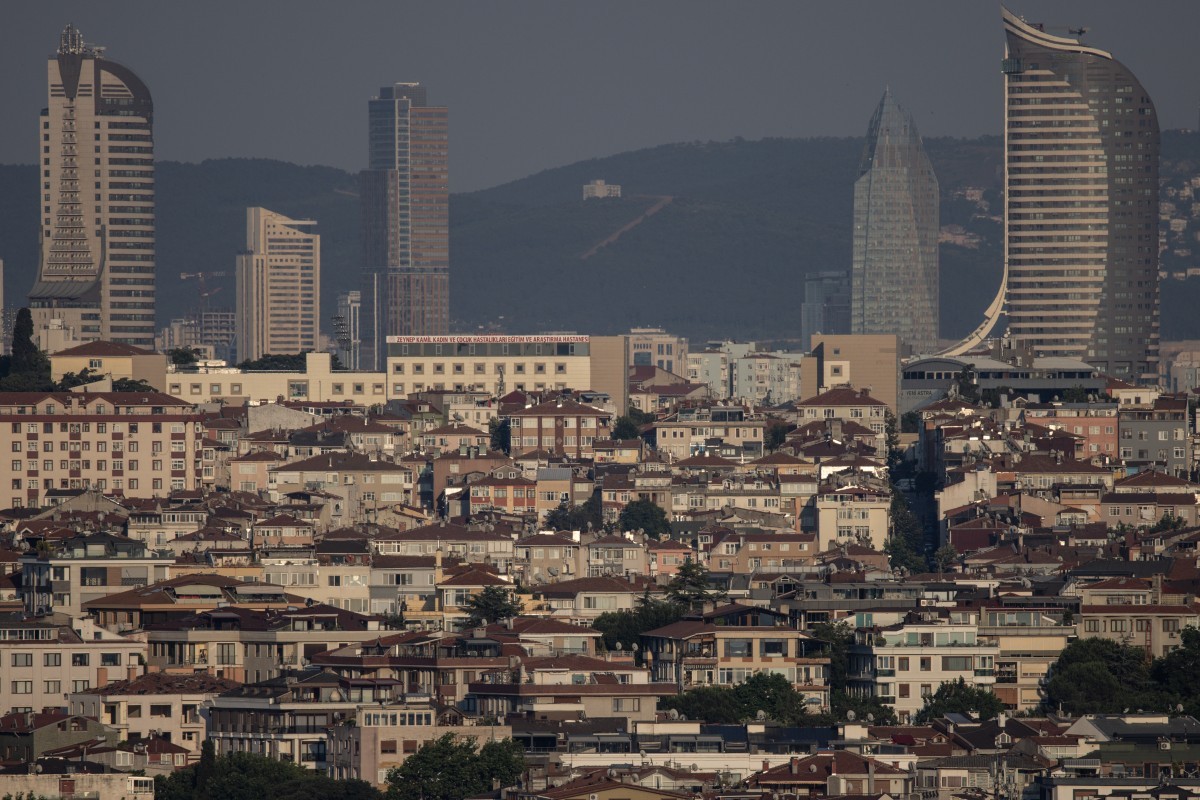
Among the 56 countries analysed, Turkey saw the highest house price increase between the first three months of 2024 and the same period last year (+52%). This growth indicates that “domestic inflation continues to significantly impact the country’s residential market,” according to the report.
The list of highest house price increases continues with two Eastern European countries: Bulgaria (+16%) and Poland (+13%). Completing the top 5 are Colombia (+12%) and Taiwan (+10.5%). Greece also saw a double-digit price increase (10.4%).
Notably, “the Australian market, with a 7.5% increase over the past 12 months, has strongly recovered compared to last year when prices were under pressure due to rising interest rates,” the document notes. The US also recorded a significant house price increase of 6.5% over the past year, which may be explained by the lack of housing supply, despite high mortgage interest rates continuing to weigh on the market.
In Portugal, house prices rose by 6.5% between the first quarter of 2024 and the same period last year, making it one of the 27 countries where housing costs increased more than the global average of 3.6% during this period. This rise in house prices in Portugal was the 14th highest among the 56 countries analysed. Spain also recorded house price growth above the global average (4.3%).
Countries with the smallest increases in house prices
Among the countries with the smallest house price increases is the UK (+1.6%), reflecting a continued slowdown in growth as high mortgage costs negatively impact access to housing. Italy also saw a modest price increase of just 1.7% over the past year.
House prices decline in 8 European countries
However, in 11 global markets, house prices fell during this period, eight of which are European countries, namely Luxembourg (-14.4%, the largest drop), Finland (-7%), Jersey (-6.3%), Slovakia (-5.2%), France (-5.2%), Germany (-3.9%), Austria (-2.6%), and the Czech Republic (-1.3%). Knight Frank explains that “France and Germany are feeling the effects of slower economic growth and high inflation over the past 12 months.”
“Hong Kong is trailing other major global markets, with an 11.6% price drop over the past 12 months. A slower economy has led to a market reassessment,” the report adds. In China, where the real estate sector is in crisis, house prices also continued to fall (-3.7%).