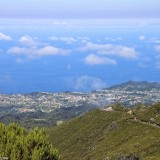
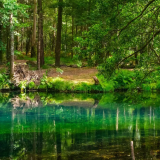
There’s a village in Serra da Estrela with more than a dozen natural swimming pools linked by hiking trails. Clean, icy water tumbles down the hillside, filling rock pools that look almost hand-carved.
There’s no airport, no five-star hotels, and no queues outside museums. Instead, there are streams, shepherds’ paths, granite houses and a pace of life that seems to have stepped neatly aside from modern rush. In 2019, the parish was officially recognised as the Capital of Natural Pools in Portugal, a title that feels more like stating the obvious to anyone who has swum there.
- The natural pools of Cortes do Meio
- Hiking trails in Cortes do Meio
- A granite mountain village where time slows down
- Food in Cortes do Meio: roast kid goat, mountain cheese and local honey
- What to see near Cortes do Meio in Serra da Estrela
- When to visit Cortes do Meio, how to get there and where to stay
The natural pools of Cortes do Meio

Often described as one of the best-kept secrets on the southern slopes of Serra da Estrela, Cortes do Meio revolves around water. The village is wrapped around the Ribeira das Cortes, a semi-glacial stream that winds down the mountain, carving out pools, waterfalls and lagoons over several kilometres.
There are now more than a dozen signposted natural pools, each with its own shape, depth and setting. In winter, during harsher years, some of the waterfalls freeze into columns of ice.
Some of the best-known pools include:
- Poço da Ponte Velha: photogenic and shallow, a good choice for families or anyone after a gentle dip.
- Poço do Funil: round and around four metres deep, like a natural bathtub set into a quiet valley.
- Poço das Azenhas: part of a longer stretch of water, better suited to proper swimming.
- Poço do Forno Velho, Poço da Fórmica and Poço do Embude: each distinct in terms of rock formations, shade and current.
Poço da Cascata: one of the local highlights, sitting at roughly 1,400 metres above sea level, with a waterfall of around 20 metres.
It’s considered the highest-altitude waterfall in Portugal.
Hiking trails in Cortes do Meio

Cortes do Meio isn’t somewhere you experience through a car window. Reaching many of the pools involves walking, though most routes are manageable for anyone with reasonable fitness.
Old shepherd and farming paths, once used to carry milk, goats, charcoal and brushwood down to Covilhã, have been converted into marked hiking and mountain biking routes.
The best known is the Rota das Pontes (PR17 CVL), a circular trail of around 7.5 km that passes several of the area’s finest natural pools.
Other routes begin near Penhas da Saúde and climb higher into the mountains:
- Rota da Varanda dos Pastores (PR14 CVL): crosses high-altitude grazing areas with wide views across the valley.
- Rota do Granito (PR13 CVL): takes in striking rock formations and natural viewpoints, showing a harsher side of the landscape.
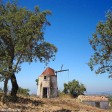
For something shorter, there’s also the Rota do Pão, just 236 metres long, linking a traditional mill to the village oven.
A granite mountain village where time slows down
Even without tackling long hikes, Cortes do Meio is worth visiting for the village itself. Granite houses line cobbled streets, and bright flower boxes soften the grey stone.
The Igreja Matriz de São Roque and the Capela de Nossa Senhora do Carmo reflect centuries of community life and faith in this mountain setting.
Near Poços das Azenhas, there are ruins of an old water-powered mill, once driven by the force of the stream. The stone structures remain, but nature is steadily reclaiming the space.
Food in Cortes do Meio: roast kid goat, mountain cheese and local honey
After a day of hiking and cold-water swims, attention turns naturally to food. In Cortes do Meio, the standout dish is roast kid goat, deeply tied to the area’s pastoral traditions.
The wider Serra da Estrela region brings more to the table:
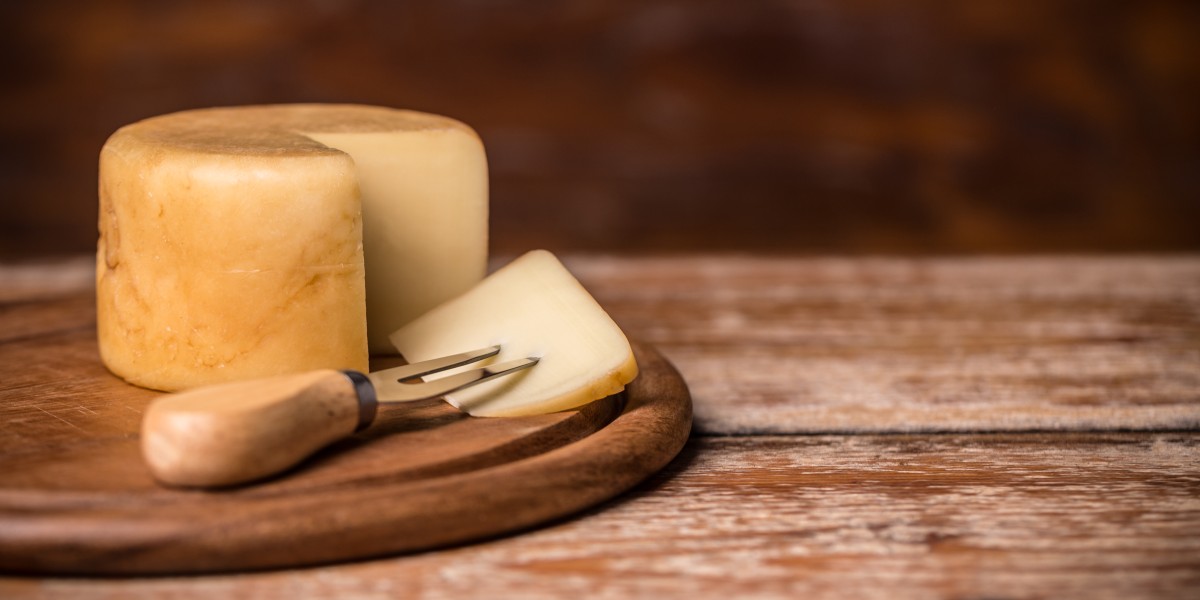
- Serra da Estrela cheese: one of Portugal’s most celebrated cheeses, soft, creamy and intense.
- Rye bread: dense and full of flavour, particularly good with cheese and cured meats.
- Traditional sausages: locally made chouriço, farinheira and blood sausage.
- Lamb stew (ensopado de borrego): especially comforting in colder months.
- Grilled trout: sourced from local rivers and streams.
- Serra da Estrela honey: often scented with heather, excellent simply spread over bread.
What to see near Cortes do Meio in Serra da Estrela

Using Cortes do Meio as a base makes sense if you want to explore more of Serra da Estrela Natural Park. Several key spots are within easy driving distance:
- Penhas da Saúde: just a few kilometres away, providing access to higher mountain areas. In winter, it’s the gateway to mainland Portugal’s only ski and snowboard resort.
Covilhã: around 15 km away, often called the “city of snow”.
It combines industrial history at the Museu de Lanifícios, religious heritage, viewpoints like the Miradouro das Portas do Sol, and an impressive street art scene spread across building façades.
- Covão dos Conchos: a 1950s hydraulic structure at Lagoa Comprida, famous for its circular spillway that looks like something out of a science fiction film.
- Manteigas and the Zêzere glacial valley: one of the most striking glacial valleys in Portugal, with Cântaro Magro cutting a sharp outline against the skyline.
- Unhais da Serra: associated with thermal waters and spa culture, and another good base for hiking.
- Serra da Estrela Natural Park itself: a vast protected area of high-altitude lagoons, marked trails and distinctive mountain biodiversity.
When to visit Cortes do Meio, how to get there and where to stay
The best time to enjoy the natural pools of Cortes do Meio is generally between May and September. During these months:
- Temperatures are higher.
- The streams still carry enough water to fill the pools.
- Waterfalls tend to be at their most impressive in spring, thanks to rainfall and snowmelt.
How to get to Cortes do Meio
- Follow the N18‑4 towards Tortosendo.
- Then take the N230 and continue for around 6 km until the junction signposted for Cortes do Meio.
- Once in the village, parking is available, but it’s important to respect residents and local signage.
Where to stay?
The accommodation options in Cortes do Meio lean heavily towards rural tourism. Thinking of staying a little longer? Properties for sale in the village start from around €50,000.
- Village houses and small estates such as Quinta do Pé Longo, with wide mountain views.
- Chalets and country houses in the surrounding area, often with fireplaces and the sound of the stream in the background.
- Stays in Covilhã, Paul or Unhais da Serra for anyone who prefers easier access to shops and services.
Stay inspired for your travels in Portugal —get our weekly newsletter for the latest travel, legal, and lifestyle news.