
A short walk from Sintra’s historic centre, Quinta da Regaleira is the monument that tends to linger in the memory. The palace is impressive, but the grounds are the real draw: mossy stone paths, ornamental lakes, towers, caves and tunnels designed to reveal themselves gradually.
It sits within the Cultural Landscape of Sintra, a UNESCO World Heritage Site since 1995. Visiting takes a little longer than people expect, particularly in high season, so it is worth allowing a proper half-day rather than treating it as a quick stop between palaces.
- The story of Quinta da Regaleira
- The Initiation Well: Quinta da Regaleira’s underground landmark
- What to see at Quinta da Regaleira
- Quinta da Regaleira tickets and prices in 2026
- Quinta da Regaleira opening hours in 2026
- How long to spend at Quinta da Regaleira
- Quinta da Regaleira and Pena Palace in one day
The story of Quinta da Regaleira
The estate’s present-day appearance is largely the work of António Augusto Carvalho Monteiro, a Portuguese-Brazilian businessman and philanthropist nicknamed Monteiro dos Milhões (“Monteiro of the Millions”) because of his wealth.
He bought Quinta da Regaleira in 1892 and commissioned the Italian architect and set designer Luigi Manini to reshape it around 1898. Work continued into the early 20th century, creating an elaborate home and garden that drew on Manueline, Gothic, Renaissance and Romanesque styles.
Carvalho Monteiro had a deep interest in symbolism, including the Knights Templar, Freemasonry, Rosicrucianism and alchemy. Those references appear all over the estate, though it is sensible not to treat every carving, number or passage as proof of a single secret ritual. Part of Regaleira’s appeal lies in that ambiguity.
The Initiation Well: Quinta da Regaleira’s underground landmark
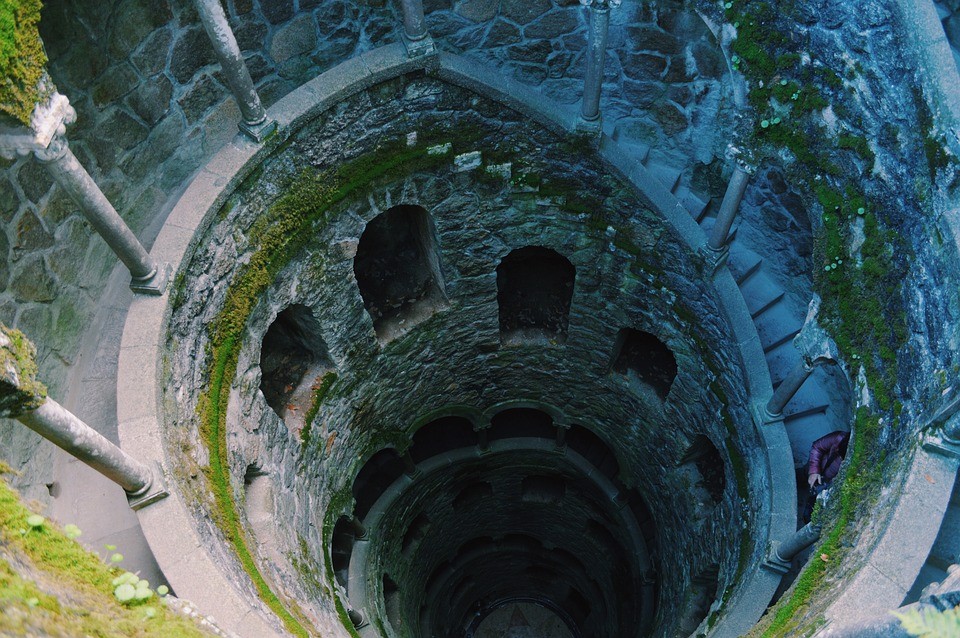
The Initiation Well (Poço Iniciático) is the site’s most photographed feature. Despite the name, it was not built to collect water. It is a 27-metre-deep stone tower sunk into the ground, with a spiral staircase running around its inner wall.
Nine landings divide the descent, a number often linked to spiritual traditions and the symbolism that fascinated Carvalho Monteiro. At the bottom, a tiled compass rose incorporates the cross associated with the Order of Christ, another recurring motif at Quinta da Regaleira.
The well connects to a network of underground routes, so the visit continues through damp, low-lit tunnels before emerging near the lakes and grottoes. Footwear with a decent grip is a sensible shout here, as the stone can be slippery after rain.
There is also an unfinished well, usually referred to as the Unfinished Well, with a more rugged character and a straighter staircase.
What to see at Quinta da Regaleira
The site is much more than the Initiation Well. The gardens reward a slower wander, with plenty of details easily missed when the queues are long.
The Palace of Regaleira
The five-storey palace has a deliberately fantastical exterior, packed with pinnacles, gargoyles and carvings. Inside, rooms retain period decoration and provide useful context on Carvalho Monteiro, Luigi Manini and the estate’s many architectural references.
The building is less vast than Pena Palace, but its interiors feel more personal and eccentric. Bear in mind that the palace closes 30 minutes before the gardens.
Chapel of the Holy Trinity
Close to the palace, the small chapel combines Christian imagery with decorative details that fit the estate’s broader symbolic world. Its frescoes and tiled floor make it worth a look before heading into the gardens.
Lakes, grottoes and hidden routes
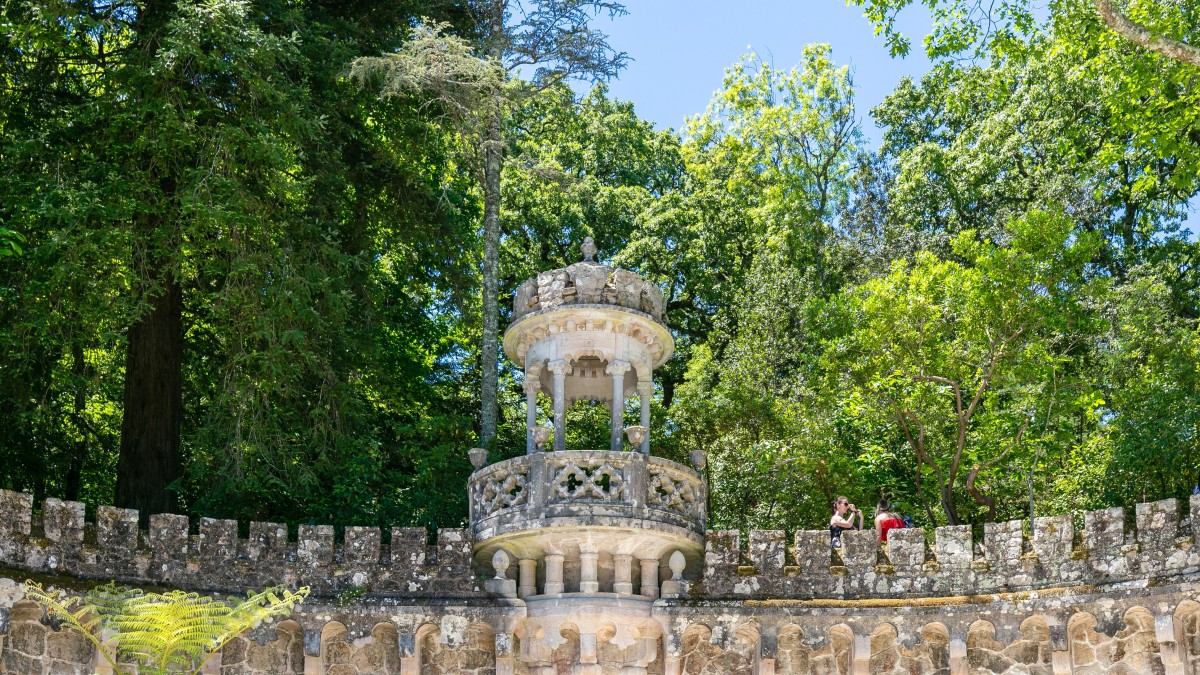
The landscaped grounds are designed as a sequence of discoveries rather than a formal park. Look out for the Lake of the Waterfall, the Ibis Fountain, the Portal of the Guardians and the Grotto of the East (Gruta do Oriente).
The grottoes are part of the fun for children and adults who do not mind a slightly theatrical detour. Some routes can feel narrow and dim, so they may not suit everyone.
Regaleira Tower
The Regaleira Tower is one of the estate’s best spots for a broader view across the grounds and Sintra’s wooded hills. It is a compact climb, but the staircase is tight in places.
Quinta da Regaleira tickets and prices in 2026
Quinta da Regaleira uses timed-entry tickets, and the official online booking system is the most reliable place to check availability before travelling.
Current non-guided visit prices for 2026 are:
- Children aged 0–5: free
- Young people aged 6–17: €15.00
- Adults aged 18–64: €20.00
- Seniors aged 65 and over: €15.00
- Family ticket for two adults and two young people: €60.00
The ticket covers access to the palace, chapel and gardens, subject to their respective closing times.

Quinta da Regaleira opening hours in 2026
The estate opens daily at 9:00 am.
- October to March: 9:00 am–6:30 pm
- April to September: 9:00 am–7:30 pm
- Last timed slot: 4:30 pm
- Last admission: 5:30 pm
The palace, chapel and exhibition spaces close 30 minutes before the gardens.
There is a special summer timetable scheduled for 10 August to 30 September 2026:
- Gardens: 9:00 am–7:30 pm
- Palace, chapel and exhibition spaces: 10:00 am–7:00 pm
- Last admission: 5:30 pm
How long to spend at Quinta da Regaleira
Allow two and a half to four hours. A quicker visit can cover the palace, chapel and Initiation Well, but it misses the point a bit. The gardens have a deliberately maze-like layout, and pauses for photographs or queues at the well can easily stretch the visit.
Quinta da Regaleira and Pena Palace in one day
The two monuments are about 2.5 km apart, but Sintra’s steep, winding roads make that distance more demanding than it looks on a map. A walk can take roughly 35–45 minutes, depending on the route and pace.
Bus 434 is commonly used for the main Sintra palace circuit, although services can be crowded during peak periods. Taxis and local tuk-tuks are another option, but fares vary, so agreeing on the price beforehand avoids awkwardness.
Stay inspired for your travels in Portugal —get our weekly newsletter for the latest travel, legal, and lifestyle news.


