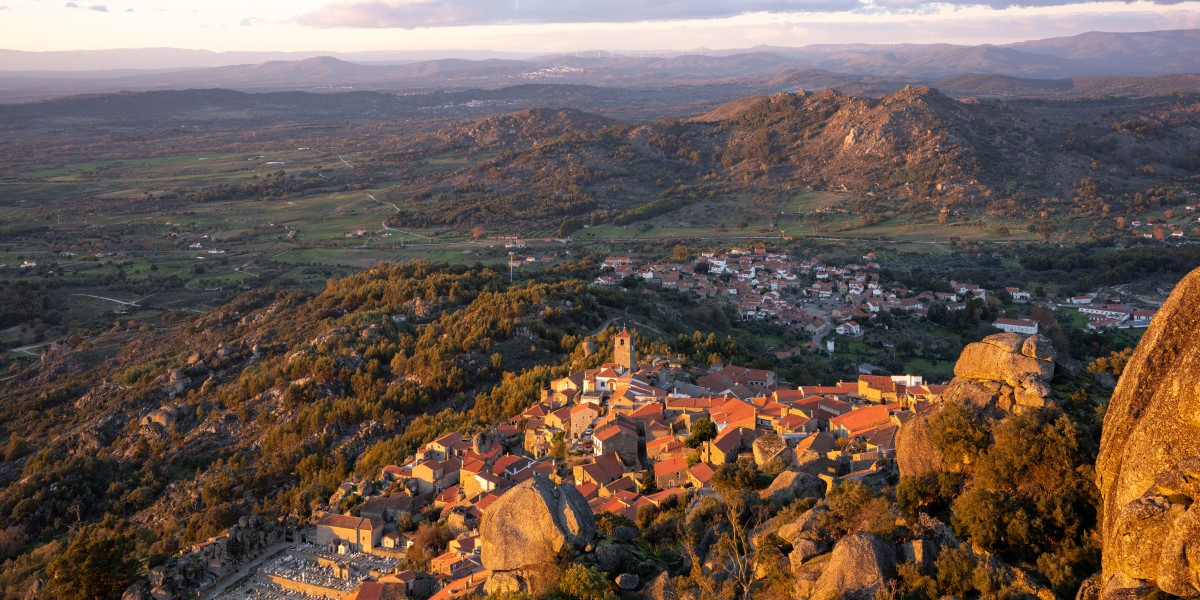
High on a granite hill in central-east Portugal, a settlement seems to grow out of the rock itself. Cobbled lanes slip between enormous boulders, roofs meet stone slabs, and a medieval fortress looks out across the plains towards Spain.
Its claim to be Portugal’s oldest village is a popular one rather than an official national record. Still, archaeological evidence points to human activity here since the Palaeolithic period, giving the place a history that runs far deeper than its remarkable architecture.
Where is Portugal’s oldest village?
Monsanto is in the Castelo Branco district and the Beira Baixa area. The historic village climbs the slopes of the Cabeço de Monsanto, a granite hill that reaches 758 metres at its highest point.
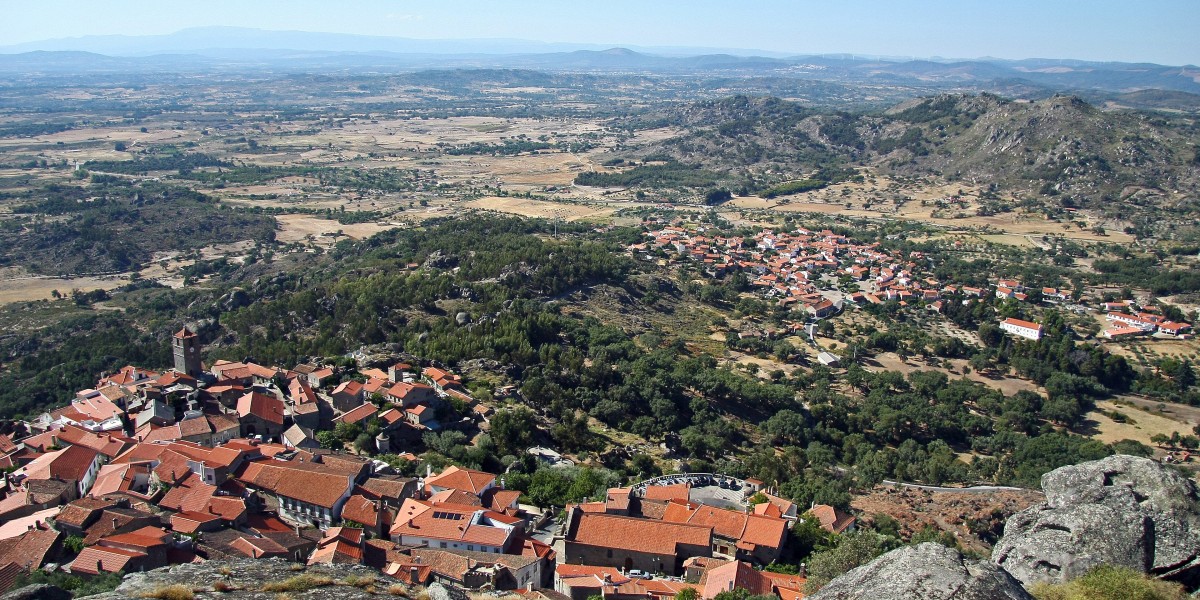
The old centre spreads across the upper slopes. Its lanes are narrow, cobbled and uneven, and several are too tight for cars. The lower part of the settlement is easier to reach by road, while the historic core and castle are explored on foot.
Why is Monsanto called Portugal’s oldest village?
The “oldest village” label reflects the long record of settlement around the hill. The Aldeias Históricas de Portugal network records human presence since the Palaeolithic period, followed by a Lusitanian hillfort, Roman occupation, Visigothic remains and Arab presence.
At the base of the hill, the São Lourenço Roman Archaeological Site is thought to contain the remains of a Roman villa and thermal complex. Four granite Roman tombs have also been recorded nearby.
The Knights Templar and Monsanto Castle
Afonso Henriques took Monsanto from the Moors and donated it to the Knights Templar in 1165. Under Gualdim Pais, the order built the castle at the summit.
The settlement received its first foral — a royal charter setting out local rights and obligations — in 1174. Sancho I confirmed it in 1190, followed by Afonso II in 1217. Manuel I granted a new charter in 1510 and gave Monsanto town status.
Monsanto’s granite houses and the 1938 title
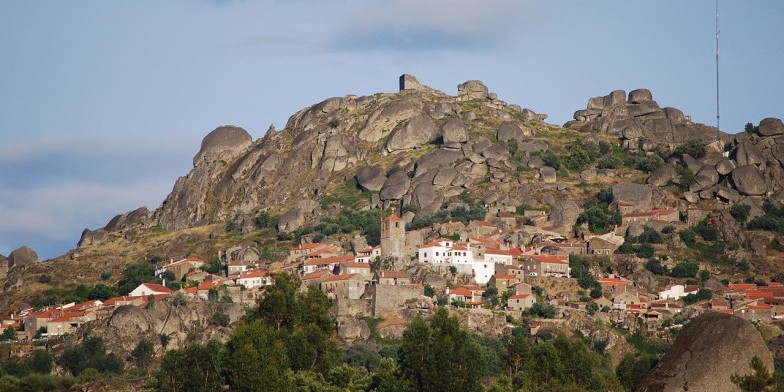
Monsanto’s homes have been built around the terrain rather than clearing it away. Boulders become parts of façades, walls and roofs, while stairways and alleys bend around the granite.
Casa de Uma Só Telha, or “House with Only One Tile”, is a well-known example, topped by one large slab of granite. The BBC reports that some boulders in the village weigh up to 200 tonnes.
The 1938 “Most Portuguese” title
Monsanto received its “Most Portuguese Village in Portugal” title in a national contest in 1938. The award is symbolised by a silver rooster on the Torre de Lucano.
Things to do in Monsanto
Monsanto is compact, though the slopes mean it works best at an unhurried pace. A day allows enough time for the castle, historic lanes and the main religious landmarks.
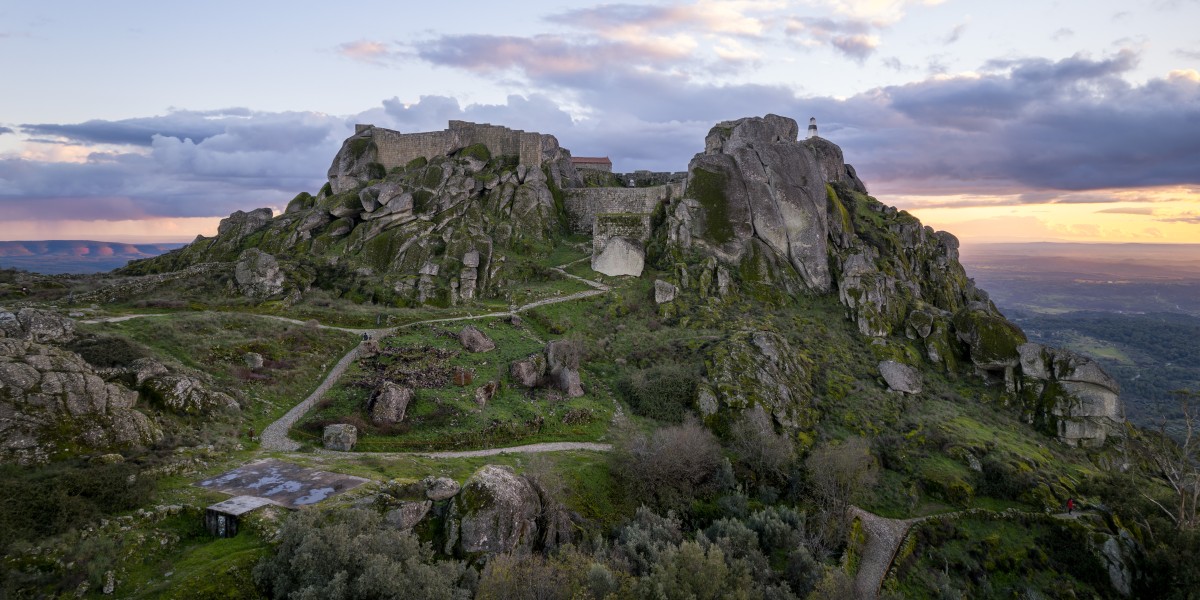
Visit Monsanto Castle
Monsanto Castle occupies the hilltop and includes surviving sections of the citadel, defensive walls and watchtowers. The area also contains the ruins of Capela de São Miguel and the Chapel of Santa Maria do Castelo.
See churches and historic landmarks
The Matriz Church, also called Igreja de São Salvador, is described in tourism information as having Romanesque and Manueline elements, with a gilded-wood altar.
Near Eugénia and Carroqueiro, the Chapel of São Pedro de Vir-a-Corça is a granite Romanesque building thought to date from the 13th century.
In Largo da Misericórdia, there's a civic pillar, along with Misericórdia Church, the former Capela do Socorro, Manueline doorways and heraldic houses.
Walk the wider Idanha-a-Nova area
Monsanto connects with the GR22 Great Route of the Historic Villages of Portugal, a long-distance walking route through the region. Beira Baixa also has cycling routes and river beaches, although access and conditions vary with the season.
Festa das Cruzes: flower pots and marafonas
Monsanto’s principal annual celebration takes place in May. During the Festa da Divina Santa Cruz, or Festa das Cruzes, women take clay pots filled with flowers to the castle walls. The pots are broken or thrown from the ramparts, sending flowers down over those gathered below. The event also features marafonas, faceless rag dolls made from crossed wooden sticks and colourful traditional clothing.
Food in Monsanto and Beira Baixa
Cooking around Monsanto reflects the produce and livestock of inland Portugal. Cabrito means kid goat and borrego means lamb; both appear in regional dishes, alongside local cheese, cured meats and stews.
Commonly associated foods include:
- cabrito assado, roast kid goat
- roast lamb and lamb stews
- wild boar stews
- alheira, a Portuguese sausage traditionally made without pork
- Serra da Estrela cheese
- cured meats and homemade jams
Opening times and menus in small village restaurants can be seasonal, so it is worth checking directly before making plans around a particular meal.
Monsanto and House of the Dragon
Monsanto was used as a filming location for House of the Dragon, with local reporting placing production in the village in 2021 and 2022. The granite homes and medieval fortifications needed little set dressing, but the village has far more to it than its screen connection.
Stay in the know about things Portugal —get our weekly newsletter for the latest travel, legal, and lifestyle news.