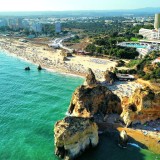
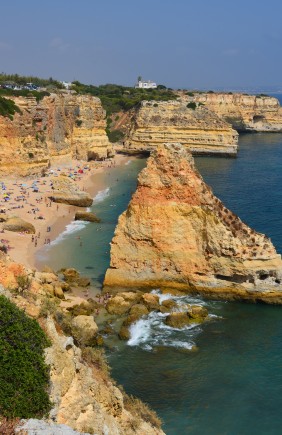
Life in Nazaré comes with an Atlantic backdrop, a strong fishing heritage and a rhythm that changes noticeably with the seasons. The town is internationally associated with giant waves at Praia do Norte, yet day-to-day life is more practical than the surf footage suggests: local schools, healthcare, shops and a compact centre sit alongside quieter residential areas inland.
What living in Nazaré is like
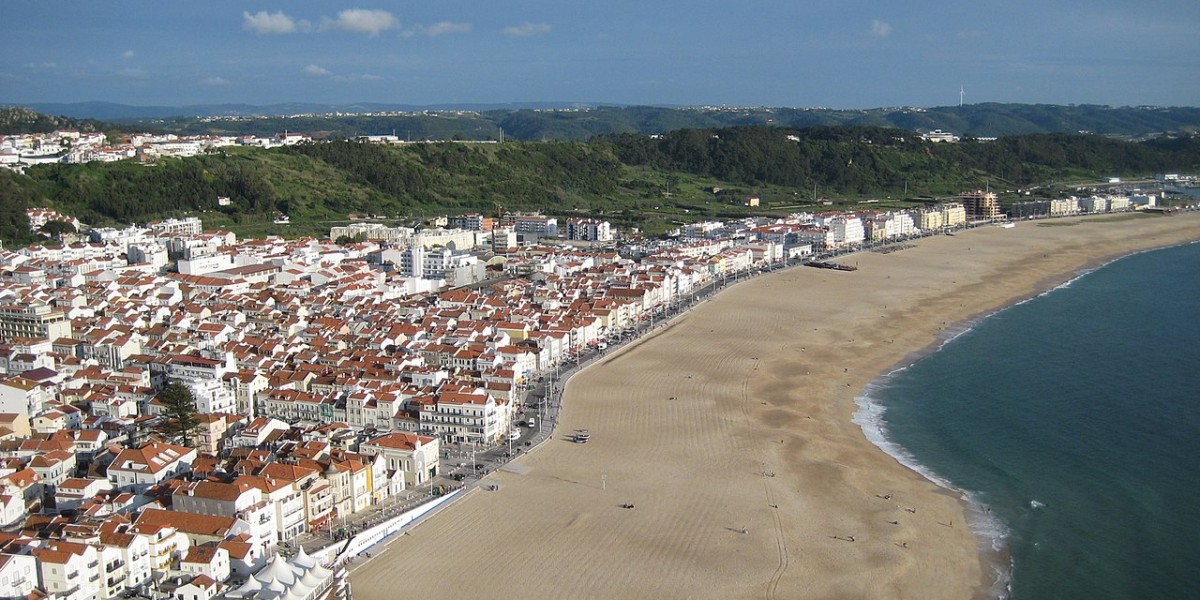
Nazaré sits on Portugal’s central-west coast, roughly 37 km south-west of Leiria. The town has two distinct sides.
- Down by the waterfront, Praia da Nazaré and the historic centre are lively in summer, with restaurants, holiday lets and day-trippers.
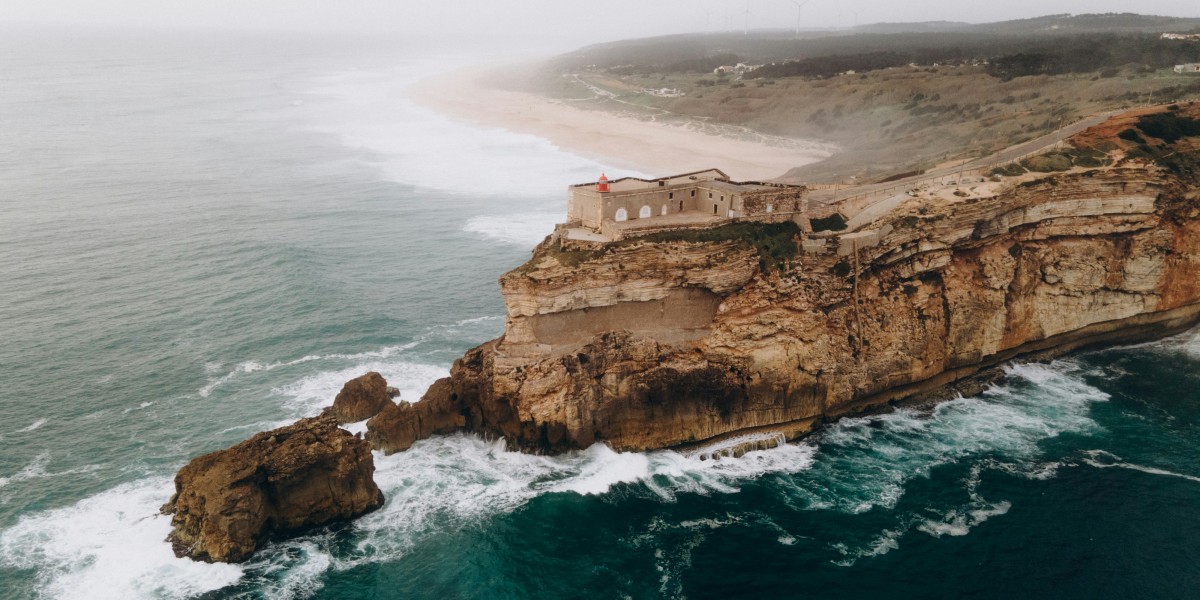
- Up on the headland, Sítio da Nazaré has sweeping sea views, religious landmarks and a more residential feel.
Daily errands are straightforward in the centre, where supermarkets, pharmacies, cafés, banks and smaller independent shops are close together. Healthcare needs can be dealt with locally for routine matters, while Leiria is the nearest larger city for a broader range of hospitals, services and shopping.
Public transport exists but is not as flexible as it is in Lisbon, Porto or Leiria. A car makes life much easier for regular trips beyond the town, school runs outside the centre or exploring the surrounding coast.
Nazaré’s famous seven-skirt tradition, sete saias, remains part of its cultural identity, alongside fishing practices and religious celebrations linked to Nossa Senhora da Nazaré.
Best areas to live in Nazaré

Nazaré town centre and seafront
The centre is the most convenient part of town for people who want to manage daily life on foot. Shops, cafés, the market area, pharmacies and the main beach are nearby, while local buses are easier to access here than in the more rural parts of the municipality.
It suits residents who value being close to the action, though the summer crowds, traffic and noise can be a bit much on the busiest streets.
Famalicão
Famalicão, in the north of the municipality, is a quieter option surrounded by countryside and close to beaches such as Praia do Salgado. It has a more village-like feel than the centre of Nazaré, with local services covering the basics and more choice available in the main town.
Housing can be better value than on the seafront, although prices will vary considerably depending on the property’s condition, plot size and proximity to the coast.
Valado dos Frades
Valado dos Frades lies inland, a short drive from Nazaré. It is generally more residential and year-round than the coastal centre, with a train station on the Linha do Oeste route and road access towards Leiria and Caldas da Rainha.
For families or residents who want more of a local residential setting, it can be a sensible place to start looking. It lacks the beach-at-your-doorstep appeal of central Nazaré, but that also means fewer summer crowds and, in many cases, more manageable housing costs.
Nazaré property prices and rent in 2026

Housing is the highest cost to factor in when planning a move. According to Idealista’s July 2026 price report, property prices in Nazaré average €3,412 per m², an annual increase of 13.7%.
An 80 m² flat bought at the municipality-wide average would therefore cost roughly €272,960, before purchase taxes, legal fees, mortgage costs and any renovation work.
Rent prices in Nazaré averaged €12.10 per m² in June 2026. At that rate, an 80 m² flat would come to around €968 per month. In practice, available long-term lets can be limited, and furnished properties in the centre may cost more, especially where landlords can earn higher seasonal rates from short stays.
For comparison, Leiria usually has a broader choice of services, jobs and year-round housing, while Nazaré is better suited to residents who put a high value on coastal living and do not need a major city on the doorstep.
Everyday cost of living in Nazaré
Everyday spending in Nazaré depends heavily on housing, car use and how often meals are eaten out in tourist-facing areas. Local cafés and family-run tascas can still be reasonable, especially away from the seafront, while summer menus and beachside venues often carry higher prices.
According to Numbeo, indicative local costs include:
- a meal for two at a mid-range restaurant: around €11
- a domestic beer in a bar: around €1.50
- a coffee or cappuccino at a café: around €1.50
- a monthly public transport pass: around €36
- basic utilities for an 85 m² flat, including electricity, heating, cooling, water and rubbish collection: around €127.50 per month
Pros and cons of living in Nazaré
Advantages of living in Nazaré
- Close access to the coast: beaches, clifftop walks and Atlantic views are part of ordinary life rather than a special occasion.
- A strong local identity: fishing heritage, religious traditions and community events give the town substance beyond its surf reputation.
- A slower pace outside summer: the colder months are calmer, with fewer visitors and a more everyday local atmosphere.
- Useful links to Leiria and Lisbon: larger-city services are within reach for planned trips.
- Potentially lower day-to-day costs than Lisbon: eating out, local services and some housing options can remain more affordable than in the capital, although property prices have risen sharply.
Drawbacks of living in Nazaré
- Limited local job market: tourism, hospitality, retail, construction and fishing-related work have a visible presence, but specialist roles are less plentiful than in larger cities.
- Seasonality: the population, traffic and noise increase in summer and around major surf events.
- Tight long-term rental market: holiday accommodation can reduce the number of homes available for permanent residents.
- Atlantic weather: winters can feel damp, windy and cooler than newcomers expect, especially in older homes.
Nazaré is at its best for people who want a proper small-town Portuguese coastal life, rather than a resort experience. The sea is never far away, but the practicalities of housing, transport and work are worth sorting before settling in.
Stay in the know about living in Portugal as a foreigner—get our weekly newsletter for the latest travel, legal, and lifestyle news.