Road trips in Portugal are still going strong in 2026, and a road trip along the Costa Vicentina remains one of the best ways to see the country’s wild Atlantic edge. This stretch of the Alentejo coast is all cliffs, untamed beaches and fishing villages that haven’t been reshaped for mass tourism.
The route below covers eight unmissable stops along one of Europe’s most dramatic coastlines.
Sines: history, sea views and Vasco da Gama
Sines is a working port on the Alentejo coast, with fishing boats, container ships and whitewashed streets all sharing the same skyline. It’s the birthplace of Vasco da Gama, and the 15th-century Castle of Sines now houses a small museum dedicated to his voyages, along with sweeping Atlantic views.
Don’t miss: climbing the castle walls for wide Atlantic views, then heading to the fishing port for a no-frills seafood lunch.
Praia de São Torpes: long Atlantic walks
Just south of Sines, Praia de São Torpes runs for nearly five kilometres along the Costa Vicentina. Since the nearby power station closed, the sea has returned to its natural Atlantic temperature, brisk but clean, and popular with surfers and bodyboarders when the swell is right.
Don’t miss: checking the surf at the southern end, where locals tend to gather with boards at first light.
Praia da Samoqueira: natural pools and wild scenery
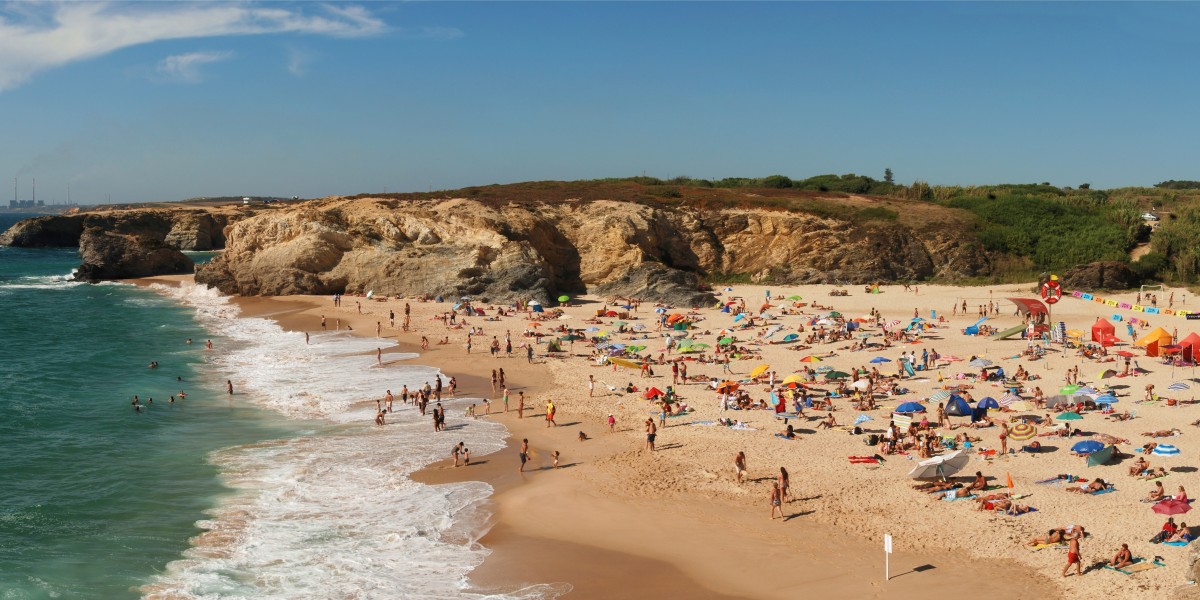
Praia da Samoqueira, near Porto Covo, is one of those beaches that rewards a bit of curiosity. At low tide, natural pools form between the rocks, and you’ll spot small fish and crabs if you take your time. It’s easy to reach by car, yet the cliffs and open Atlantic give it a properly wild edge compared to the busier Algarve resorts further south.
Don’t miss: exploring the rock pools as the tide retreats, when the coastline feels almost prehistoric.
Porto Covo: postcard-perfect Alentejo
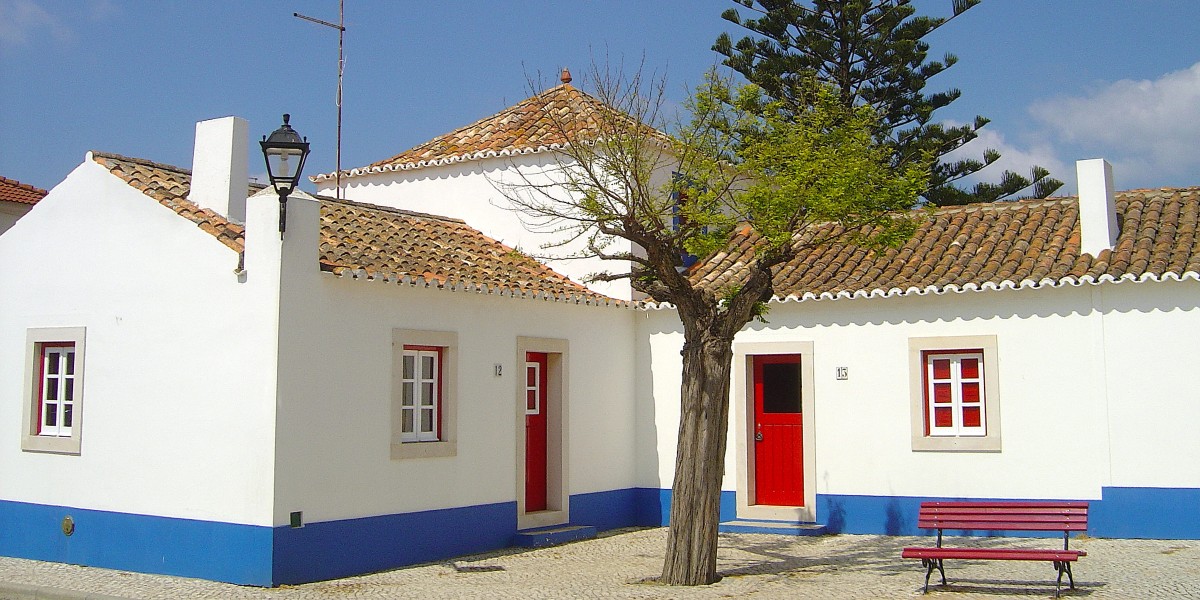
Porto Covo sits right on the Costa Vicentina and has that classic Alentejo look: low white houses trimmed in blue, a tidy central square and cafés where time slows down. It’s a good base for exploring nearby beaches, including Praia dos Buizinhos, a small cove framed by dark cliffs that almost vanish at high tide.
Don’t miss: dinner in the village square, especially dishes featuring polvo or black pork from the Alentejo interior.

Ilha do Pessegueiro: forts, folklore and wide sands
Just offshore near Porto Covo, Ilha do Pessegueiro is one of the most recognisable sights on this stretch of the Alentejo coast. In summer, small boats ferry visitors across to explore the ruins of Forte de Santo Alberto, built in the 17th century to defend against pirates and privateers.
Don’t miss: walking along the sand at low tide for uninterrupted views of the island and its old stone fort.
Cabo Sardão: cliffs and stork nests
Cabo Sardão marks the westernmost point of the Alentejo coast and feels exposed in the best possible way. The lighthouse stands above sheer cliffs, and this is one of the few places in Europe where white storks build nests directly on sea cliffs instead of rooftops. Part of the Rota Vicentina hiking trail passes through here, so you’ll often see walkers tracing the cliff edge.
Don’t miss: spotting stork nests perched improbably on the rock face below the lighthouse.
Pego das Pias: river swimming in Odemira
A short detour inland near Odemira brings you to Pego das Pias, a natural swimming spot along the Mira River. Smooth rock formations create sheltered pools, and the surrounding greenery makes it feel miles away from the Atlantic wind. There’s a marked walking trail nearby, and locals often bring simple picnics rather than beach umbrellas.
Don’t miss: finding a shaded rock ledge beside the river for a quiet swim away from the coast.
Praia da Amália: wild beauty and fado history
Praia da Amália, named after fado singer Amália Rodrigues, sits below the cliffs where she once had a holiday home. The path down is uneven and partly hidden by vegetation, which keeps numbers lower than at easier-access beaches.
Don’t miss: the freshwater stream that runs across the sand before meeting the Atlantic.

Campervan travel in 2026: what to know
Travelling the Costa Vicentina by campervan remains popular, but rules inside the Natural Park of Southwest Alentejo and Costa Vicentina are more strictly enforced than in previous years.
Wild camping and overnight parking outside authorised areas can lead to fines, particularly near sensitive dune systems and cliff tops. Official motorhome parks and campsites are dotted along the route, and sticking to them helps protect this fragile stretch of coastline.
Local communities have become more vocal about erosion and overtourism, so low-impact travel and respect for signage matter more than ever here.