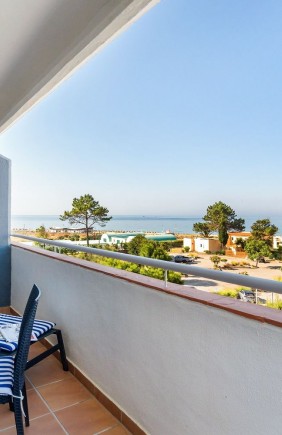
Portugal has become one of Europe’s most attractive destinations for non-EU citizens seeking long-term residency. Its climate, accessibility, healthcare and relatively straightforward visa pathways continue to draw retirees, remote workers and investors from around the world.
For those considering a move, understanding how residency in Portugal for non-EU citizens works is essential. While the country offers several visa routes, each comes with specific requirements, timelines and obligations.
- Can non-EU citizens live in Portugal?
- The main visa routes to residency
- The residency process step by step
- Temporary vs permanent residency
- Does buying a house in Portugal give you residency?
- Financial requirements and cost of living
- Healthcare and public services
- Tax considerations and NHR regime
- Final thoughts
Can non-EU citizens live in Portugal?
Yes, non-EU citizens can live in Portugal, but they must first obtain a valid visa and residence permit. Unlike EU nationals, who can move freely, non-EU citizens must apply for residency through one of Portugal’s structured visa programmes.
The process typically begins in your home country and continues once you arrive in Portugal, where you formalise your residency status.
While this may sound complex, Portugal is widely regarded as one of the more accessible EU countries for long-term relocation.
The main visa routes to residency
Portugal offers several visa options for non-EU citizens, each designed for different lifestyles and income sources. The most common include:
The D7 visa (passive income visa)
The D7 visa in Portugal is one of the most popular routes for retirees and financially independent individuals. It is designed for applicants who can demonstrate a stable passive income, such as pensions, rental income or investments.
Applicants must show that their income meets minimum thresholds and that they have accommodation in Portugal. The D7 visa allows residence without the need to work locally, making it particularly suitable for those planning retirement or remote income living.
The Golden Visa
The Portugal Golden Visa is aimed at investors willing to make a qualifying financial commitment in the country. Historically, this included property purchases, though recent changes have shifted the focus towards investment funds, job creation and cultural contributions.
The Golden Visa offers flexibility, as it does not require full-time residence in Portugal. It also provides a pathway to permanent residency and Portuguese citizenship after several years.
For buyers considering property, it is important to note that direct real estate investment is no longer the primary route under this programme.
Work and business visas
Non-EU citizens can also apply for residency through employment or business activity. Work visas require a job offer from a Portuguese employer, while entrepreneurial visas support those setting up businesses.
Digital nomad visa
Portugal has introduced visa options for remote workers, allowing individuals employed by foreign companies to live in the country while continuing their work. These visas require proof of income above a certain level and are increasingly popular among younger expats looking to work remotely in Portugal.

The residency process step by step
The process for applying for residency in Portugal generally follows a clear structure.
First, applicants apply for a visa through a Portuguese consulate in their home country. This involves submitting documentation such as proof of income, evidence of accommodation, health insurance and a clean criminal record.
Once approved, the visa allows entry into Portugal.
After arrival, applicants must attend an appointment with immigration authorities to obtain a temporary residence permit.
This permit is typically valid for one to two years and can be renewed. Over time, residents may apply for permanent residency or citizenship, provided they meet the required conditions.
Temporary vs permanent residency
Portugal’s residency system begins with temporary residence. This allows individuals to live in the country legally and access services such as healthcare and education.
After five years of continuous residence, individuals can apply for permanent residency in Portugal. This status provides long-term stability and fewer renewal requirements.
At the same time, applicants may also be eligible to apply for Portuguese citizenship, subject to language requirements and other criteria.
Does buying a house in Portugal give you residency?
This is a common misconception. Buying property in Portugal does not automatically grant residency.
While property ownership can support certain visa applications, particularly by providing proof of accommodation, it is not, on its own, sufficient to secure residency.
Those looking to relocate must apply through one of the recognised visa routes, such as the D7 visa or other residency programmes.
Financial requirements and cost of living
Residency applications require proof of financial stability. For the D7 visa, this usually involves demonstrating income that meets or exceeds Portugal’s minimum wage levels, with higher requirements for couples and families.
Portugal is often seen as more affordable than many northern European countries, though costs vary by region. Cities such as Lisbon and Porto have experienced rising property prices, while smaller towns and inland areas offer more affordable living.
Applicants should budget for housing, healthcare, utilities and everyday expenses, ensuring their income comfortably supports their lifestyle.

Healthcare and public services
Once residency is established, non-EU citizens can access Portugal’s public healthcare system. Many expats also maintain private health insurance, particularly during the early stages of residency.
Portugal’s healthcare system is generally well-regarded, and access improves significantly once residents are fully registered within the system.
Other public services, including education and local administration, become more accessible once residency is formalised.
Tax considerations and NHR regime
Portugal has historically attracted expats through its Non-Habitual Resident (NHR) tax regime, which offered favourable tax treatment on certain types of foreign income. Whilst this closed in 2024, there is now a scheme dubbed NHR 2.0 that covers specific highly qualified professions and economic activities.
Professional advice is recommended to understand how Portuguese tax rules apply to your specific situation.
Final thoughts
Residency in Portugal for non-EU citizens is both achievable and structured, with clear pathways for different lifestyles. Whether through the D7 visa, investment routes or work-based options, the country offers flexibility for those seeking long-term relocation.
Understanding visa requirements, financial expectations, and the application process is key to a smooth transition. While property ownership alone does not grant residency, it often plays a role in establishing a long-term base.
With the right preparation, Portugal continues to offer one of Europe’s most accessible and attractive options for non-EU citizens looking to build a life abroad.
Stay in the know about living in Portugal as a foreigner—get our weekly newsletter for the latest travel, legal, and lifestyle news.