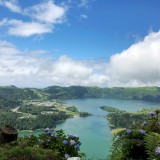
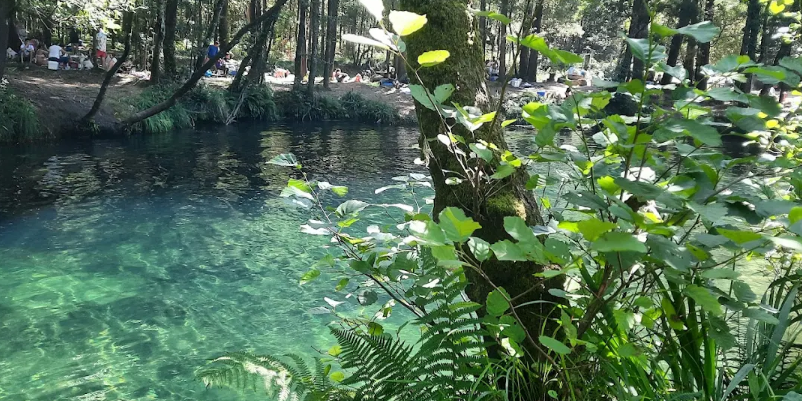
When you first see the photos, it is easy to swear you are looking at some cove in Croatia: turquoise water, rocks and greenery in contrast. But this lagoon is in Portugal.
Fed by the clear waters of the River Âncora, this lagoon has become one of the most photogenic spots in Minho, although it remains relatively little known to those who live further from the region.
Where is Lagoa da Esturranha?
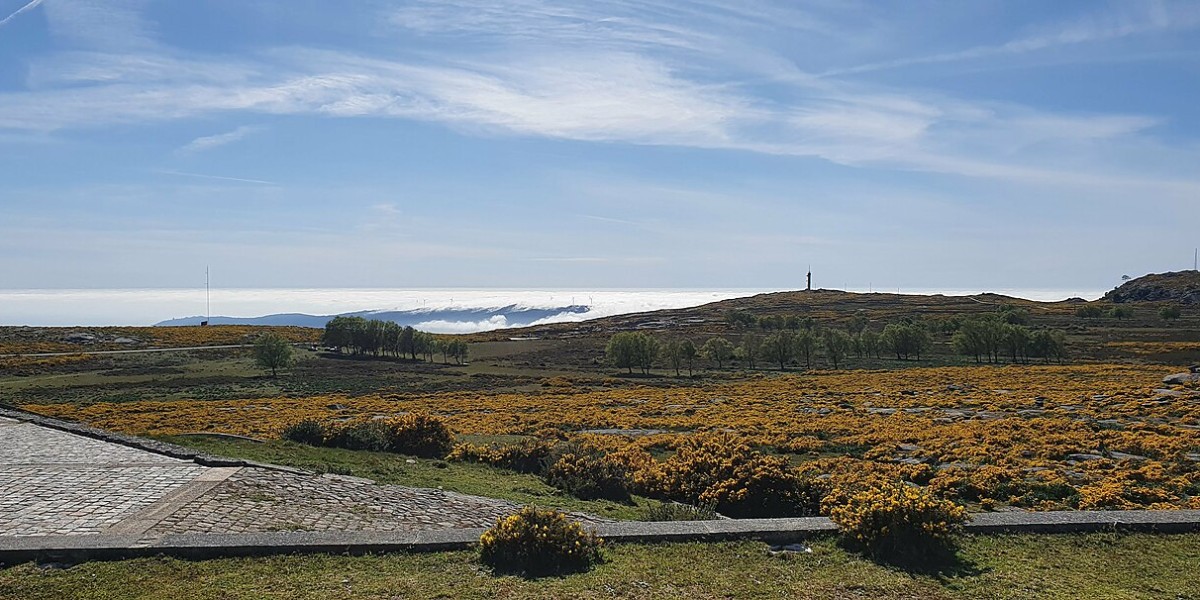
Lagoa da Esturranha is in the Serra d’Arga, in the municipality of Viana do Castelo, in northern Portugal.
The scenery, which so strongly recalls parts of Croatia, comes from a combination of three very simple elements:
- The turquoise water of the River Âncora, which forms the lagoon;
- The dense green vegetation around the banks;
- The rocks and small waterfalls that create different depths.
The result is a small “natural amphitheatre”, ideal on hot days, with deeper areas for swimming and shallower sections that are safer for children, all just a few metres apart.
How to get to the blue lagoon in Viana do Castelo
There is no train or bus that drops you directly at Lagoa da Esturranha, so the most practical option is to go by car to the Serra d’Arga area.
In general, the plan is as follows:
- Drive to the Viana do Castelo area;
- From there, head towards the Serra d’Arga / River Âncora area;
- Park somewhere with pedestrian access to the lagoon (many visitors leave the car on the verge of a rural road or in small lay‑bys);
- Do the rest of the route on foot, along paths by the river.
It is useful to have:
- Comfortable footwear (part of the route is on uneven ground);
- A light backpack with water and a snack;
- Awareness that access can become more difficult on busier days.
What will you find at Lagoa da Esturranha?

When you arrive, you understand why the lagoon has been highlighted in articles about “almost secret places” in Portugal. In a relatively compact area, you will find:
- Deeper spots that are good for swimming;
- Shallow areas, ideal for children or for those who prefer just to paddle;
- Smooth rocks that work as natural “sun loungers”;
- More secluded corners, shaded by trees, that are good for picnics;
- The constant sound of running water, which helps you switch off from daily life.
Unlike some very popular lagoons, there are no facilities here: no beach bar, toilets or lifeguard. Everything you need you have to bring with you – and, above all, take away again so you do not leave any rubbish behind.
Best time of year and time of day to visit
The lagoon is especially appealing on hot summer days, when the cool river water is particularly refreshing. Even so, there are a few things to bear in mind:
- Summer (June to September): best for swimming and sunbathing, but a higher chance of finding more people, especially at weekends;
- Spring and early autumn: less suitable for swimming (colder water), but excellent for walks, photography and picnics.
What to take (and not forget) to the Minho blue lagoon
Since there are no beach facilities, it is worth going at least reasonably prepared. If you want to spend a good part of the day there, it makes sense to take:
- Water and snacks / a picnic‑style lunch;
- A towel or picnic blanket;
- Footwear that can get wet (for walking on rocks and in shallow areas);
- Sun cream and a hat;
- A rubbish bag (everything that goes in with you, comes out with you).
Explore holiday rentals in Minho. And stay inspired for your travels in Portugal —get our weekly newsletter for the latest travel, legal, and lifestyle news.