Parents who choose to work part-time will be able to receive state support until the baby is 12 months old. Portugal's new employment law, which came into force on 1st May 2023, allows parents to take an additional 180 days of parental leave combined with part-time work.
Portuguese banks will soon be more limited in charging fees for various banking operations. A bill approved by Parliament on Friday 14th April puts an end to the charging of abusive fees to all customers who have mortgage loans or loans for other purposes.
Yet another voice has joined the chorus of criticism against the end of the golden visa programme in Portugal, which is included in the "Mais Habitação" (More Housing) package announced by the Government.
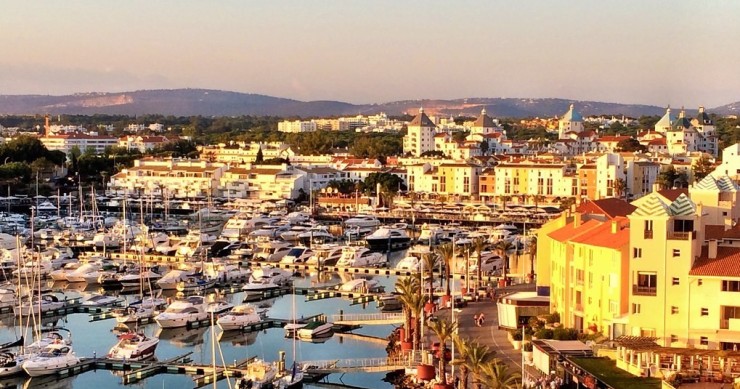
The residential and tourist resort of Vilamoura, in the Algarve, has decided to create a Renewable Energy Community (REC) with 60,000 m2 of photovoltaic panels by 2035, which will provide electricity to 15,000 families, becoming a pioneer in the application of recent legislation.
"The aim is to be
In 2021, the Algarve was the second region in Europe with the greatest loss of wealth compared to 2019, that is, compared to the pre-pandemic period. Only the Balearic Islands, in Spain, had a greater fall in real GDP during the two periods under review.
The era of the cheapest mortgages ever in Europe came to an end in 2022, after interest rates on home loans on the continent rose to the highest levels in decades, due to high inflation. But this hasn't stopped the demand for mortgages to buy a house in Portugal.
The global macroeconomic context has changed and the effects on the housing market in Portugal and across the world are increasingly evident. But will house prices drop in Portugal?
More than 50% of workers in Portugal received salaries lower than 1,000 euros per month in 2022, a percentage that rises to 65% in the case of young people under 30, according to data from the Ministry of Labour, Solidarity and Social Security.
Portugal salaries in 2022 What's the
The European Commission (EC) has unveiled its autumn macroeconomic forecasts for 2022 and 202 and, in general, it did not bring good news for Portugal. The EC revised inflation in Portugal upwards to 8% in 2022, although this is lower than the average for the Eurozone (8.5%).
At a time when the energy crisis is looming over Europe, Portugal, France and Spain have made history. The three European countries have agreed on what is known as a green energy corridor, which will supply the European space with natural gas and also green hydrogen.
Is Portugal going into a recession? The prime minister, António Costa, has reassured the Portuguese people that "it is not foreseen in the macroeconomic scenario" of Portugal "any recession next year", stressing that the country "will continue to grow".
High inflation continues to leave its mark in Portugal, with various foodstuffs and basic everyday products rising in price. When it comes to the cost of food in Portugal, this is the case, for example, with bread, which rose 15% in Portugal in August 2022 compared to the same month last year.
If you own a property in Portugal, transferring your mortgage to another bank is an operation that can help you save some money and get better bank financing conditions.
The prices of goods and services are usually updated at the beginning of each year. But the inflationary spiral that is raging in Europe is causing this update to be brought forward.
The Minister of Infrastructure in Portugal, Pedro Nuno Santos, has stated that the government is monitoring the pressure of rising interest rates on household income and is "prepared to study measures", in addition to the 2% limit introduced in the updating of rents.
When it comes to buying a house in Portugal with a mortgage, one must bear in mind that it is necessary to pay a set of expenses and taxes associated with the loan. That's why it's important to have savings available before buying a property and taking out a mortgage in Portugal.
Portugal is bracing for energy cuts and will follow the example of other European countries, such as Spain, limiting the levels of energy consumption in public buildings, private companies, commerce, services, industry and also in family homes.