You don’t have to drive down to the Algarve to find some of the best Blue Flag beaches in Portugal. If you’re living in the capital or just in town for a few days, several Blue Flag beaches near Lisbon are easy to reach by train, bus or car.
Many sit along the Cascais line from Cais do Sodré, meaning you can go on a day trip from Lisbon and be on the sand in under half an hour. Others require a car, but reward you with wilder Atlantic scenery.
Carcavelos, Cascais
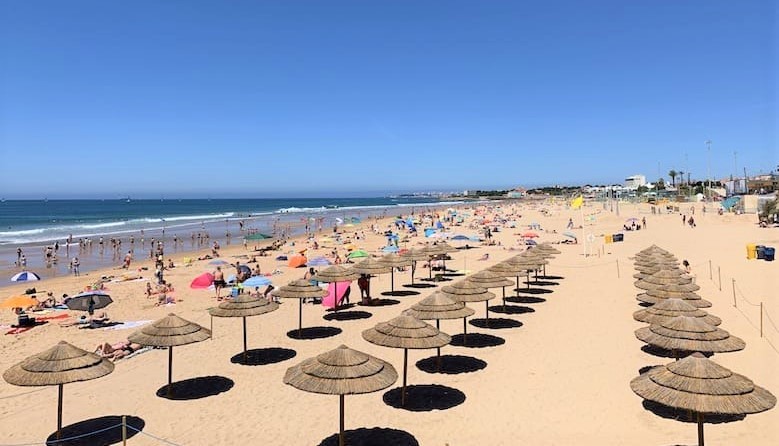
Carcavelos is the classic large beach near Lisbon, a broad stretch of sand with a lively, sociable atmosphere. It’s well known as a go-to spot for surf schools, and many people learning to surf in Portugal start here thanks to its consistent waves.
The promenade behind the beach is lined with cafés and restaurants, and in the late afternoon there’s often a young, student-heavy crowd. It does get busy at weekends and during summer, but the size of the beach means you can usually find space.
How to get there: take the Cascais line train from Cais do Sodré to Carcavelos (around 20 minutes), then walk about 10 minutes to the beach.
Santo Amaro, Oeiras
Santo Amaro is the largest beach in Oeiras and very much a local favourite. Set close to the mouth of the Tagus estuary, the sea here is typically calmer than on more exposed Atlantic beaches, which makes it a reliable choice for a swim.
The wide sandy stretch is backed by a promenade that’s popular for evening strolls. It’s also known for volleyball games that continue after dark thanks to the lighting along the seafront.
How to get there: catch the Cascais line train from Cais do Sodré to Santo Amaro de Oeiras (roughly 25 minutes), followed by a short five‑minute walk to the sand.
São Pedro do Estoril, Cascais
Tucked between cliffs, São Pedro do Estoril feels more intimate than some of the bigger Lisbon-area beaches. The layered rock formations give it a distinctive look, and at low tide you can explore small rock pools along the shore.
The waves are often manageable for beginner surfers in Portugal who prefer somewhere quieter than Carcavelos.
How to get there: travel on the Cascais line from Cais do Sodré to São Pedro do Estoril (about 30 minutes), using the station underpass that leads directly onto the beach.
Adraga, Sintra
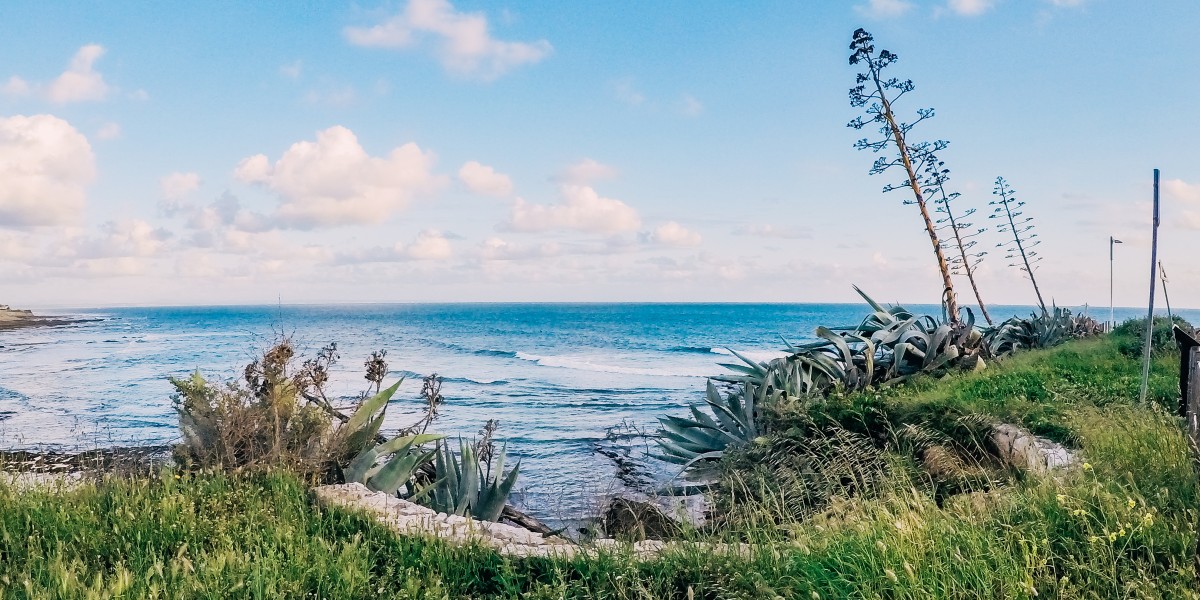
For something more dramatic, Praia da Adraga in the Sintra municipality offers a very different coastal landscape. Surrounded by cliffs and rock formations, it’s known for its striking Atlantic scenery and a more rugged feel compared with the urban beaches along the train line.
The setting, within the wider Sintra-Cascais Natural Park area, makes it popular with people looking for a wilder stretch of coast while still staying within reach of Lisbon.
How to get there: drive from central Lisbon to Praia da Adraga in Sintra, which takes around 50 minutes to an hour, as public transport connections are limited.
Guincho, Cascais
Guincho sits on the edge of the Sintra-Cascais Natural Park and feels exposed, raw and untamed. It’s famous for strong winds, which have made it a recognised spot for kitesurfing and windsurfing. The backdrop of dunes and hills adds to its sense of scale, and Cascais is often recognised as one of the best coastal towns in Portugal.
The conditions mean it’s not the calmest place for a casual swim, particularly on windier days.
How to get there: drive from Lisbon to Guincho in about 40 minutes, or take the train to Cascais (around 40 minutes) and continue by local bus for roughly 15–20 minutes.

São João da Caparica, Almada
Cross the 25 de Abril Bridge, and you reach the long sandy stretch of the Costa da Caparica. São João da Caparica is one of the first beaches along this coastline, with a wide expanse of sand that rarely feels cramped.
Restaurants and beach bars line the dunes, giving it a relaxed, social feel that works well for families and groups of friends.
How to get there: drive across the 25 de Abril Bridge to São João da Caparica in about 25–30 minutes, or take the ferry to Cacilhas (10 minutes) and then a bus to the coast for a total journey of around 45 minutes.
Monte Velho, Porto de Carretas
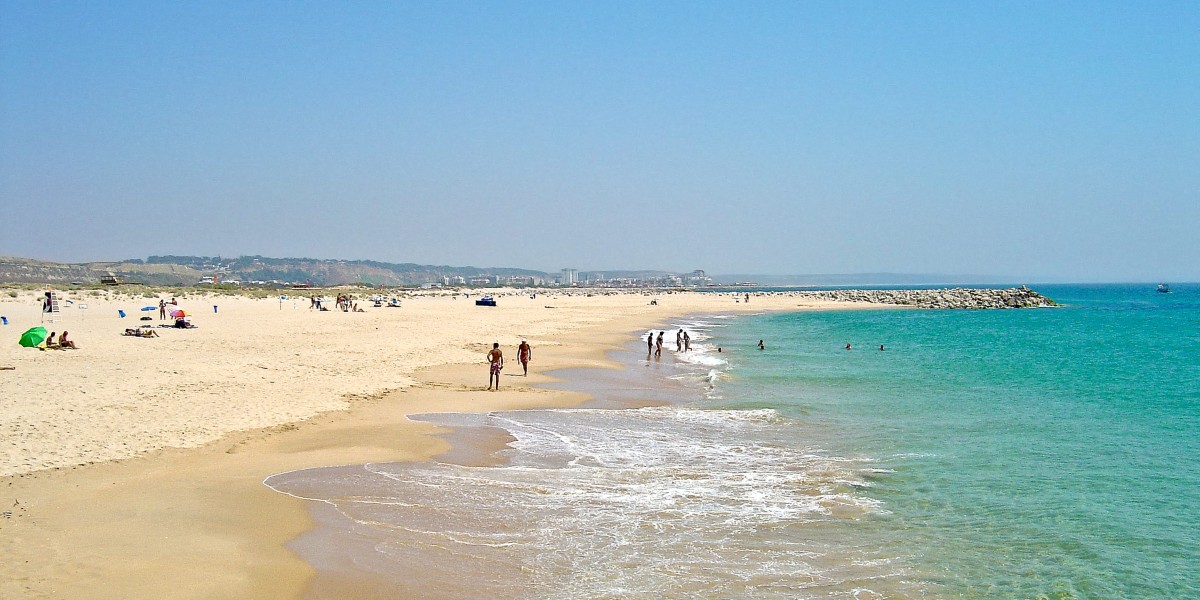
Further south on the Santo André coast, Monte Velho stands out for its sense of space and isolation. Recognised with Blue Flag status in recent years, it’s part of a protected nature reserve and has a notably undeveloped character.
There are no long rows of sunbeds or dense restaurant strips here. Instead, you get a broad, open beach where even in peak summer, it can feel quiet.
How to get there: drive south from Lisbon towards the Santo André coast, allowing roughly 90 minutes, as there is no practical public transport option.
Torre, Oeiras
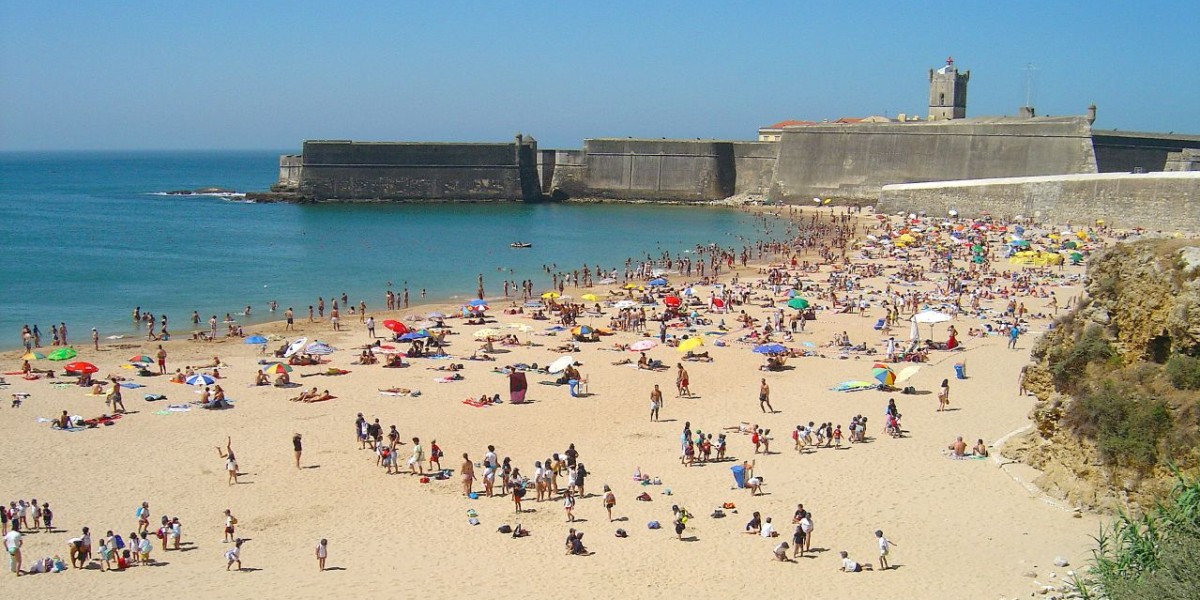
Torre is one of the most distinctive Blue Flag beaches near Lisbon thanks to its setting beneath the 16th-century Forte de São Julião da Barra. The fort shelters the small cove, helping create calmer water that many people compare to a natural swimming pool.
Its size means it fills up quickly in summer, especially with local families.
How to get there: take the Cascais line train from Cais do Sodré to Oeiras (about 30 minutes) and then walk along the seafront for approximately 15 minutes to reach the beach.
Stay inspired for your travels in Portugal —get our weekly newsletter for the latest travel, legal, and lifestyle news.