

Rising house prices are increasingly shaping who can live in Portugal’s cities, affecting more than just where people live—they are threatening quality of life.
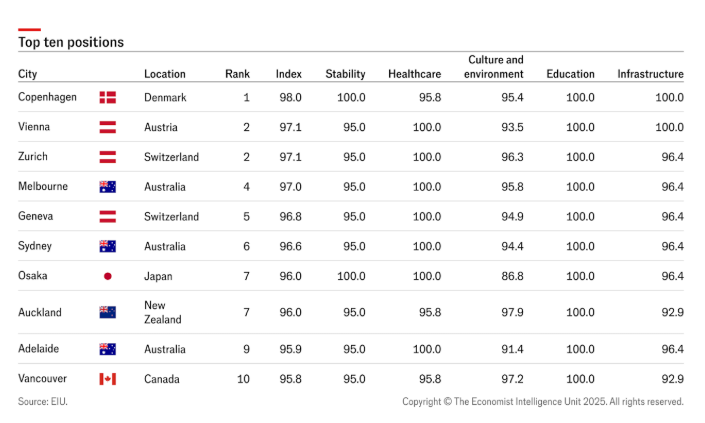
The Global Liveability Index 2025, published by the Economist Intelligence Unit (EIU) and presented in Lisbon recently, highlights how affordable housing has become the defining factor in city livability. While medium-sized cities manage to balance services, infrastructure, and lifestyle, larger urban centres like Lisbon and Porto face soaring rents, limited housing supply, and increasing living costs.
Portugal’s cities in the global rankings
Lisbon ranks 60th globally, slightly below London and Madrid but ahead of Rome and New York. The city scores highly in culture, environment, and quality of life, as well as stability and education. Porto and other Portuguese cities, while smaller, benefit from a better balance between infrastructure and affordability, making them more accessible to residents.
Yet for many Portuguese families, owning a home remains out of reach. The EIU’s “Carrie Bradshaw Index” compares average salaries to the cost of renting a one-bedroom flat, assuming rent should not exceed 30% of income. With the average Lisbon salary around €26,000 per year, a resident would need nearly double to buy a property comfortably.
The human and economic cost
The housing crisis isn’t just a social problem—it’s an economic one. Jaime Luque of the European Commission’s Housing Advisory Board warns:
“When students, young professionals, or essential workers cannot find housing in urban areas, cities lose competitiveness.”
Urban planning expert Andreas Michelsen adds that quick fixes like modular or prefabricated homes do not guarantee long-term quality of life. He suggests that renovating and adapting existing housing stock is a smarter and more sustainable solution.
Urgent action needed in Portugal
Lisbon Mayor Carlos Moedas recently requested a dedicated Recovery and Resilience Plan (RRP) for housing at the European Commission. Experts advocate long-term investment through tax incentives, pan-European housing funds, and renovation programmes to improve affordability.
Jaime Luque sums it up:
“More investment means more supply, and more supply tends to lower prices—this is exactly what Portugal’s cities need to protect quality of life.”
With housing costs climbing, the future liveability of Portugal’s cities depends on urgent action to make homes affordable again.