Carnival in Portugal is one of those times of year when the country drops its guard a bit. Taking place throughout February, you get satire in the streets, kids in costume, and everything from rustic folk rituals to full-on samba parades.
How carnival is celebrated in Portugal
At its core, Carnaval in Portugal is the last blow‑out before Lent. It’s rooted in Entrudo traditions – a mix of Catholic pre‑Lent and older, rough‑and‑ready folk customs. Today, it’s as much about community and play as religion.
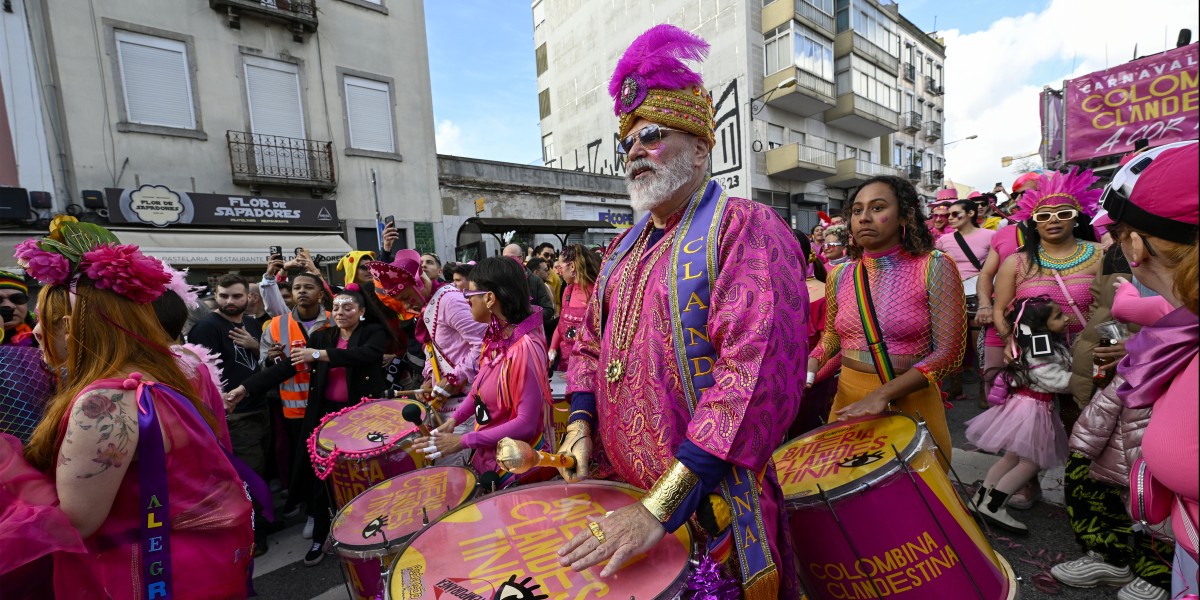
Typical things you’ll see:
- Street parades with floats, dancers and marching bands
- Samba schools and drum groups influenced by Brazil
- Satirical costumes poking fun at politicians and public figures
- Children’s parades organised by schools and councils
- Night‑time street parties and indoor bailes de carnaval
Best carnivals in Portugal
There isn’t one single “best” carnival, but there are some places in Portugal that are great for celebrating carnival. Here are five of the most interesting ones to have on your radar.
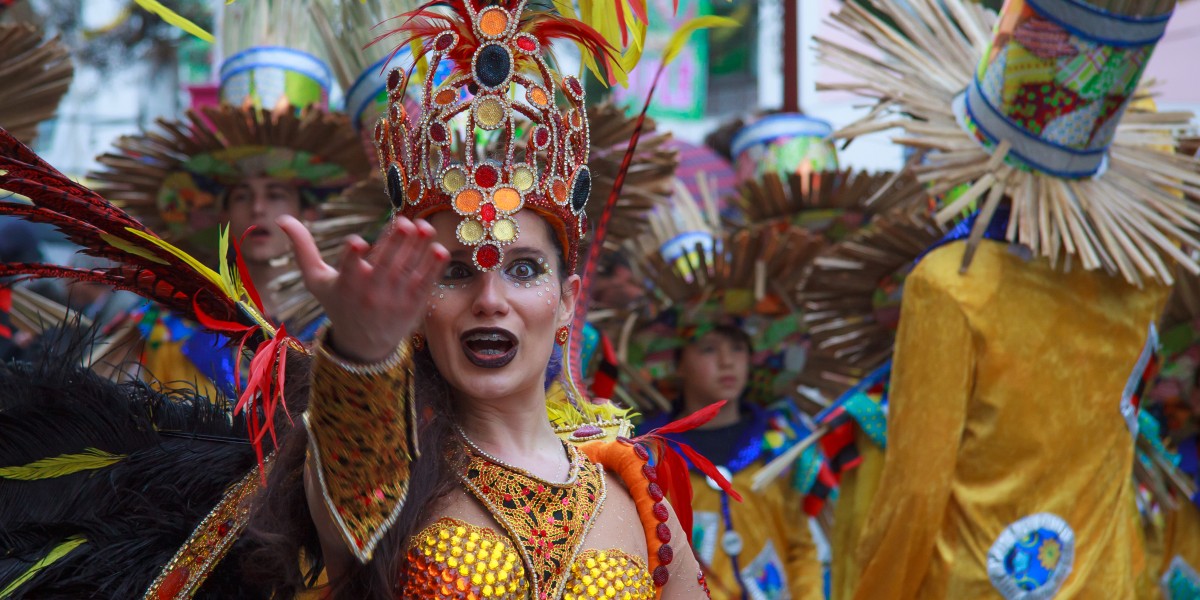
- Torres Vedras – Often treated as the most “traditional” of the big carnivals, with a strong local identity and a lot of political satire.
- Ovar – A northern, coastal town that punches above its weight during carnival. Expect a colourful mix of samba groups, marching bands and carefully prepared costumes.
- Loulé – The Algarve’s headline carnival, with parades that mix samba dancers, political floats and a big dose of southern sunshine. It feels more international and slightly more tourist‑oriented.
- Lisbon – Instead of one mega parade, you get several neighbourhood events, Brazilian‑style blocos and themed parties across the city and suburbs.
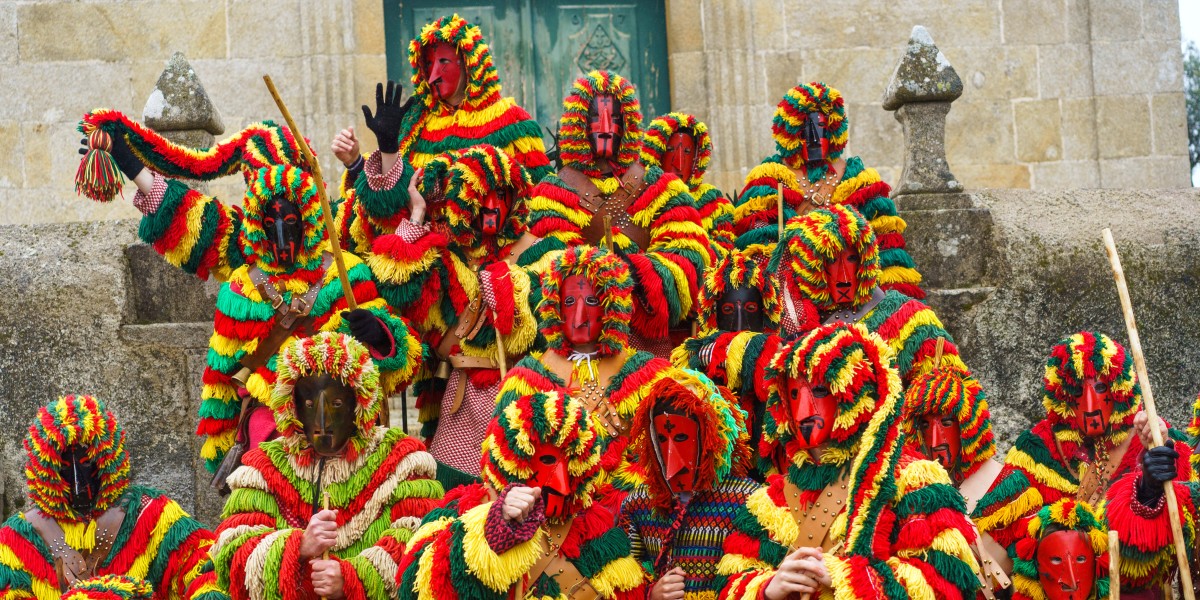
- Podence – A small northern village where masked caretos in brightly coloured suits and cowbells run through the streets. It’s raw, colder (weather‑wise) and more folklore‑driven than the urban parades.
Carnival traditions in Portugal
Carnival in Portugal has deep roots in older winter and early‑spring rituals, when people would eat, drink and push social boundaries a bit before Lent. Over time, those customs blended with Catholic calendars and turned into what locals call Entrudo and carnaval.

Some of the main carnival traditions you’ll come across:
- Entrudo water and flour games
In more traditional areas, Entrudo meant throwing water, flour or even ash, and playing pranks in the streets. - Caretos in the north and interior
In Trás‑os‑Montes and other northern inland areas, masked figures known as caretos roam the streets in colourful costumes with cowbells. - Matrafonas and cross‑dressing satire
In places like Torres Vedras, men dressing up as exaggerated women – the famous matrafonas – is a cornerstone of the local carnival. - Cabeçudos and political floats
Giant cabeçudos (big‑headed figures) and satirical floats skewering politicians and public figures are common, especially in bigger towns. - Samba schools and Brazilian influence on the coast
In coastal and urban areas, you’ll find samba schools, drumming groups and parades that clearly echo Brazilian carnival.
What to wear at carnival in Portugal
February in Portugal is still winter, so the carnival photos can be misleading. You will see people in sequins and feathers, but most locals build costumes over layers and practical shoes. You’ll fit in if you make some kind of effort – even a simple mask or wig is better than turning up in plain jeans and a winter coat.
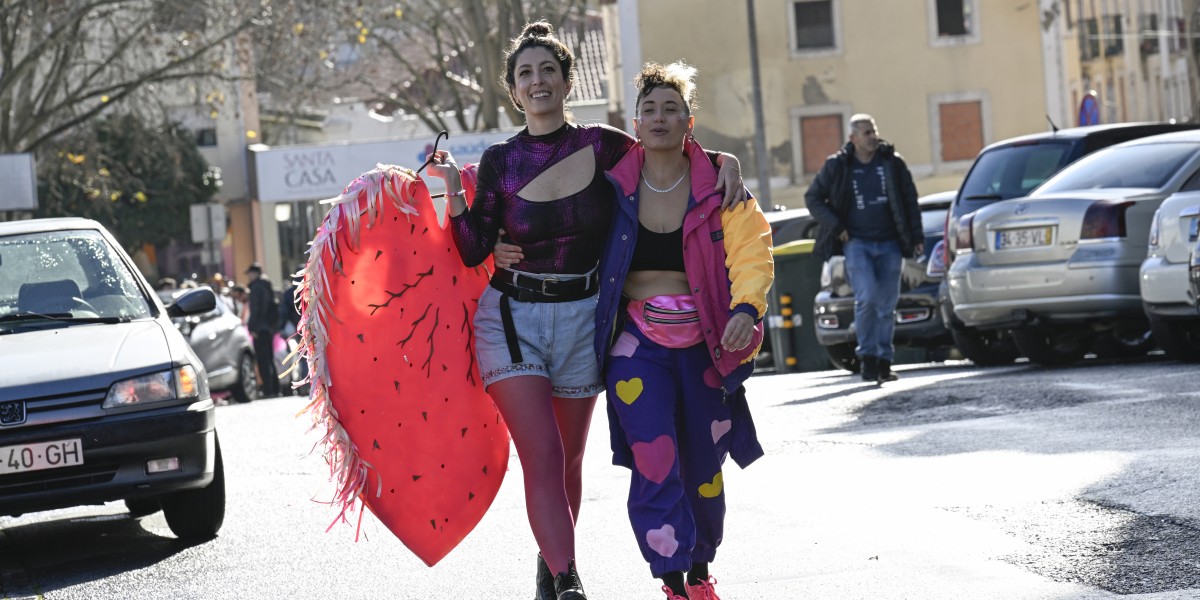
Themes for foreigners include:
- food (e.g. giant pastel de nata outfits);
- film, series and game characters;
- absurd concepts (e.g. walking Wi‑Fi signal, lost suitcase, British weather cloud).
Comparing carnival in Portugal and Spain
You’re not the only one thinking about hopping between Iberian carnivals. Plenty of people who live in Portugal or Spain end up doing both over a few years, and they do have a slightly different flavour.
Big Spanish carnivals like Cádiz or Santa Cruz de Tenerife are massive international events, with a lot of media coverage and visitors. Portuguese carnivals tend to be smaller and more local, even in well‑known places like Torres Vedras or Loulé.
Stay inspired for your travels in Portugal —get our weekly newsletter for the latest travel, legal, and lifestyle news.