Average salaries across Europe in 2024 draw a stark map of wage inequality. Portugal sits in 22nd place, well behind the continent’s top performers but above many Eastern European economies.
Portugal’s position in the European salary ranking
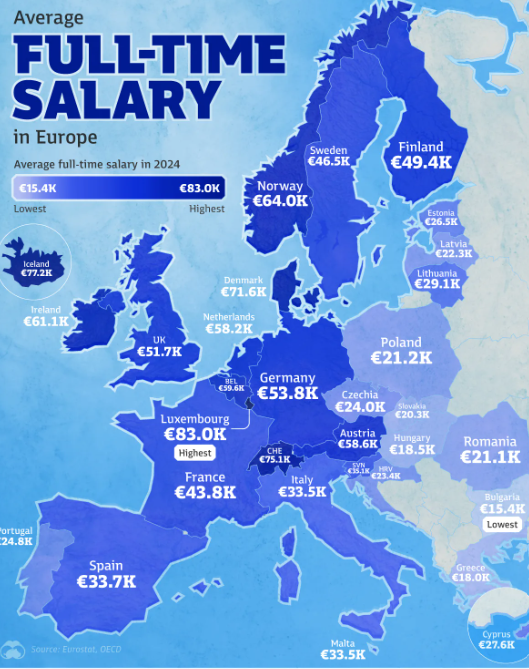
According to Visual Capitalist (based on data from Eurostat and the OECD), Portugal’s average gross annual full-time salary was €24,818 in 2024. This places the country in the lower half of the European table, despite being a Western European economy. However, Portugal’s national minimum wage increased in 2026, placing it 12th among EU countries.
For foreign workers and digital nomads considering living in Portugal, the national average is only a starting point. Salaries in Lisbon’s technology and finance sectors often sit above the countrywide figure, while pay in smaller inland towns can be lower.

How Spain, Italy and the UK compare with Portugal
Spain and Italy provide the most immediate reference points for understanding Portugal’s place in Europe’s wage hierarchy.
All three sit below the Western and Nordic leaders, but above many Eastern European states, where average salaries are under €20,000. Together, they form a Southern European cluster with broadly similar salary levels:
- Spain: €33,700 average gross annual salary
- Italy: €33,500 average gross annual salary
The UK’s average full-time salary of around €51,700 highlights a significant gap with Southern Europe.
Europe’s highest-paying countries
At the pinnacle of the ranking is Luxembourg, where the average gross annual full-time salary is around €83,000. Just below Luxembourg sit other high-income European economies:
- Iceland, with an average annual income above €77,000
- Switzerland and Denmark, where average salaries are above €70,000 per year
Europe’s two largest economies occupy intermediate positions:
- Germany: average gross annual salary of €53,791
- France: average gross annual salary of €43,790
Eastern Europe at the bottom of the table
At the lower end of the ranking are several Eastern and South-Eastern European countries:
- Bulgaria, with an average annual salary of around €15,387, has the lowest in Europe
- Followed by Greece, Hungary, Slovakia and Romania, which also sit near the bottom of the table
Nominal salaries vs cost of living: what the figures mean for foreigners
Headline salary figures are only part of the story, especially for foreign residents and remote workers comparing European countries for relocation. For example, differences in the cost of living in Spain vs Portugal can significantly alter your quality of life.
High-wage countries often have a higher cost of living, particularly for housing, services and childcare. Lower-wage countries may offset part of the gap through cheaper housing and day-to-day expenses.
Cost of living in Portugal in context
Several broad trends shape real purchasing power in Portugal. The country generally has lower nominal salaries than Spain, Italy and the UK. This makes questions about how much money you need to live comfortably in Portugal particularly relevant for foreign residents and remote workers.
In recent years, however, high house prices threaten quality of life across Portugal, with a growing gap between local wages and property prices in tourist-heavy areas and major cities. This pressure is felt most sharply by long-term renters and younger households trying to secure stable accommodation.

Stay in the know about living in Portugal as a foreigner—get our weekly newsletter for the latest travel, legal, and lifestyle news.
For a taste of the high life, sign up for the monthly luxury market round-up.