Portugal sits in 4th place in a recent league table of child well-being across countries, just behind the Netherlands, Denmark and France. The ranking comes from the UNICEF Innocenti Report Card approach, which compares some of the wealthiest countries using a small set of comparable indicators.
For foreign families considering life in Portugal, this puts the country firmly in the top group overall, but with a mixed profile across the three dimensions.
- How child well-being is measured in rich countries
- Portugal’s results on children’s mental well-being
- Portugal’s performance on children’s physical health
- Skills and education outcomes for children in Portugal
- Comparing Portugal with other European countries in the league table
- Climate-related pressures on schooling in Portugal
- Living in Portugal with children
How child well-being is measured in rich countries
The UNICEF framework for comparing countries uses six indicators designed to capture different aspects of children’s lives, based on criteria such as quality, coverage and international comparability.
The three dimensions and six indicators
1. Mental well-being
- Life satisfaction: percentage of 15-year-olds with high life satisfaction
- Adolescent suicide: suicide rate among 15–19-year-olds
2. Physical health
- Child mortality: mortality rate among children aged 5–14
- Overweight: share of children and adolescents aged 5–19 who are overweight
3. Skills
- Academic proficiency: percentage of 15-year-olds proficient in reading and mathematics
- Social skills: percentage of 15-year-olds who say they make friends easily at school
The league table aims to create a balanced picture of how children are doing, acknowledging that some countries perform very differently across these three pillars.
Portugal’s results on children’s mental well-being
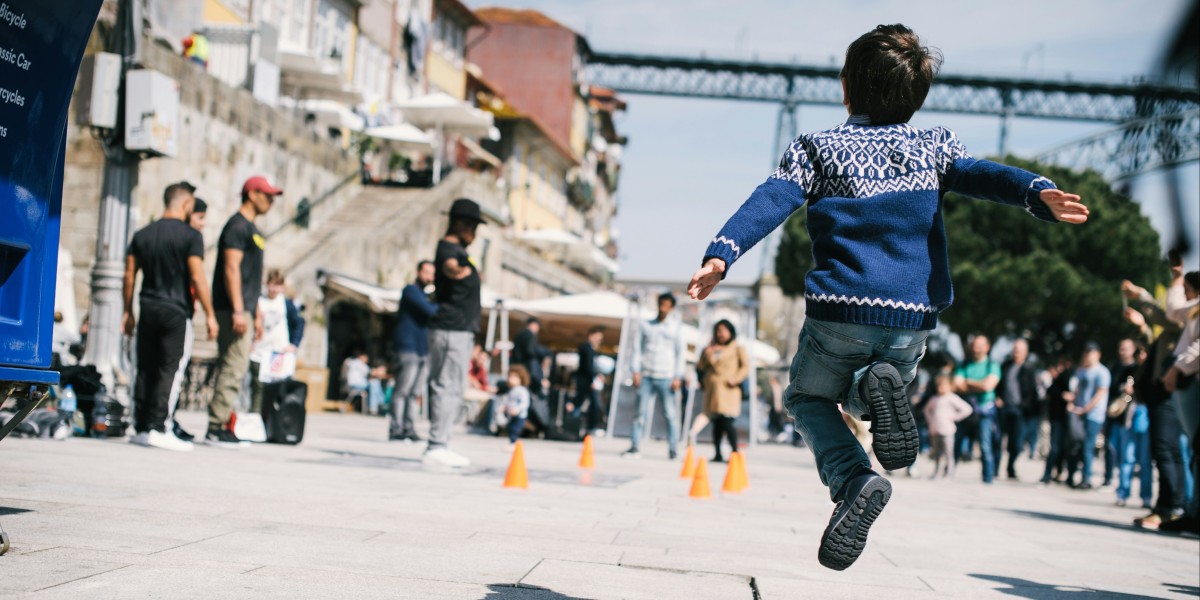
Portugal ranks 2nd for mental well-being, one of the strongest results in the entire table.
Placed alongside other European countries, this puts Portugal in the top third, close to the profile of the overall leaders where children tend to report relatively positive mental health outcomes.
Portugal’s performance on children’s physical health
Portugal ranks 10th for physical health.
Within this picture, one recent trend stands out. In the most recent period for which data are available (2018–2022), rates of children who are overweight increased in around one third of countries. However, the number decreased in only two: Portugal and Italy.
This means Portugal is one of a very small group managing to reduce childhood overweight at a time when many peers are moving in the opposite direction.
Skills and education outcomes for children in Portugal
Where Portugal lags in the ranking is the skills dimension, where it comes 22nd.
Compared with its very strong performance on mental well-being and its solid standing on physical health, this result highlights a weaker area for Portugal in the international comparison.
Comparing Portugal with other European countries in the league table
In the overall league table of child well-being, the top ten countries and their ranks on mental well-being, physical health and skills are:
Rank | Country | Mental health | Physical health | Skills |
|---|---|---|---|---|
1 | Netherlands | 1 | 4 | 11 |
2 | Denmark | 3 | 3 | 8 |
3 | France | 11 | 2 | 9 |
4 | Portugal | 2 | 10 | 22 |
5 | Ireland | 24 | 11 | 1 |
6 | Switzerland | 13 | 7 | 6 |
7 | Spain | 4 | 25 | 16 |
8 | Croatia | 9 | 31 | 3 |
9 | Italy | 8 | 16 | 23 |
10 | Sweden | 14 | 13 | 14 |
Iberian comparison: Portugal, Spain and Italy
Portugal, Spain and Italy share some common features:
- All three achieve relatively strong mental well-being results, sitting in the top third of the ranking
- Spain falls to 25th for physical health, while Portugal holds 10th and Italy 16th
- Both Portugal (22nd) and Italy (23rd) show weaker skills outcomes, while Spain sits mid-table on skills in 16th
Climate-related pressures on schooling in Portugal
In 2024, an estimated 25 million schoolchildren across 17 Innocenti Report Card countries experienced interruptions to learning because of climate-related events.
Within this broader picture, according to the United Nations Children’s Fund (2025), Portugal recorded 16,093 students affected by wildfire-related school disruptions in 2024.
These wildfire disruptions add an extra layer of strain for pupils, families and schools, sitting alongside the more traditional education and health indicators used in the league table. For foreign families, it highlights how climate events are starting to intersect with schooling, timetables and childcare arrangements in a concrete way.
Living in Portugal with children
Overall, Portugal’s profile combines a strong foundation in mental and physical well-being with more modest results on skills. For foreign families already settled or planning a move to Portugal, these data sit alongside the pros and cons of living in the country and recent rankings on Portugal’s liveability. Together, they point to a generally favourable context for family life.
These findings also tie in with research on the best city in Portugal for quality of life, and how two Portuguese cities have some of Europe’s cleanest air, while still highlighting areas where extra educational and social support may matter for helping young people thrive.
Stay in the know about living in Portugal as a foreigner—get our weekly newsletter for the latest travel, legal, and lifestyle news.
For a taste of the high life, sign up for the monthly luxury market round-up.