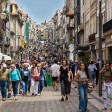
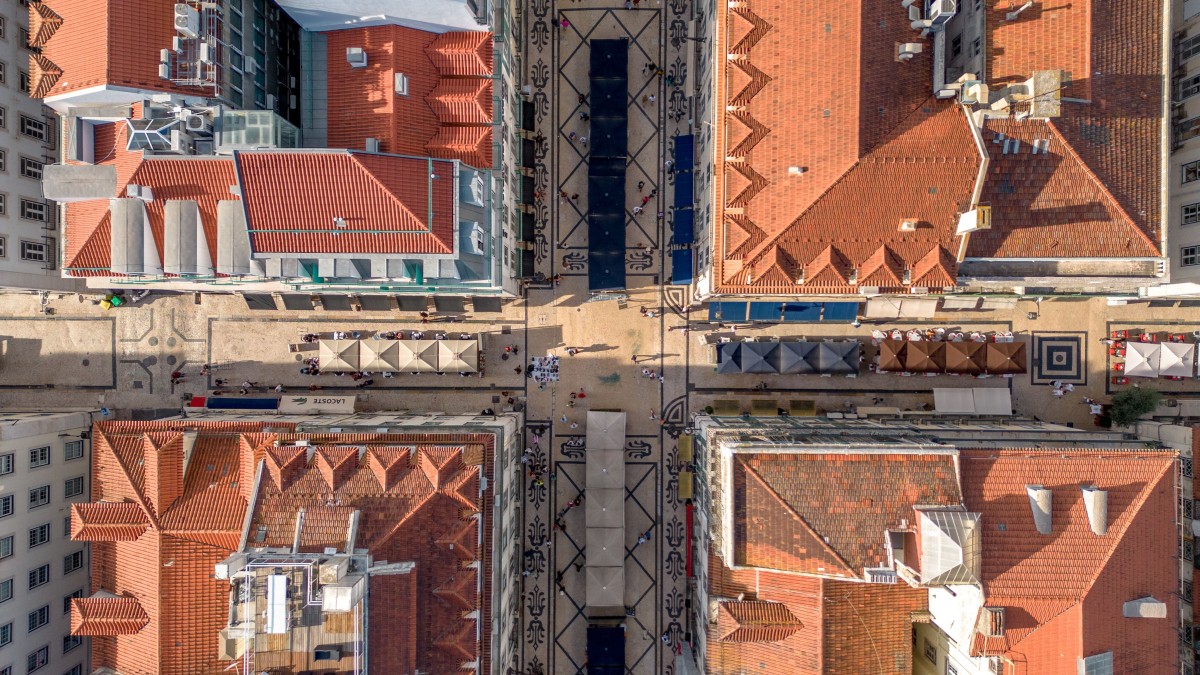
High street retail in Portugal has been the focus of a recent study analysing its dynamics, looking in particular at pedestrian behaviour and the commercial positioning of five of the main arteries in Lisbon and Porto. The conclusion is that Rua de Santa Catarina, in the Invicta City, is the busiest, attracting an average of 3,269 people per hour.
That is the main finding of CBRE’s HighStreet Footfall study. According to the analysis, Lisbon’s Rua Garrett and Rua Augusta come just behind Santa Catarina, with 2,892 and 2,408 people per hour, respectively.
Well below those figures are Avenida da Liberdade, also in Lisbon, with 1,267 people per hour, and the Clérigos area in Porto, with around 850 people per hour.
- When it comes to patterns of use and commercial profile, Rua Augusta stands out for maintaining steady footfall throughout the day, thanks to its balanced mix of restaurants and fashion retailers.
- Rua Garrett, with a combination of ‘premium’ and ‘mass market’ brands and serving as one of the main access routes to areas with a strong leisure and entertainment focus, sees its highest footfall at the end of the day, particularly between 7 pm and 8 pm.
- Avenida da Liberdade also records a late afternoon peak, between 6pm and 7 pm, reflecting a steady build-up of traffic during the day. It remains Lisbon’s luxury hub, with a strong presence of high-end jewellery brands.
Lisbon leads in prime rents

Despite being the street with the highest footfall, Rua de Santa Catarina commands rents of around €90 per m², considerably lower than Rua Augusta and Rua Garrett, both at €150 per m²/month, and Avenida da Liberdade at €125 per m²/month. Clérigos posts a significantly lower figure, at around €67.5 per m²/month.
As for rental growth levels by street, CBRE highlights the following conclusions:
- A greater concentration of traffic in specific areas of Porto compared with Lisbon
- Differences between the retail offer on each street and the audience they attract
- Different levels of purchasing power among the local populations of the two cities
- Different compositions of the tourist target in each city, with the main distinction being the greater weight of the North American segment in Lisbon’s tourism compared with Porto’s
Portugal shows strong retail performance
At its most recent event dedicated to the retail sector, CBRE showed that shopping centres have recorded very positive performances over the past four years, particularly in terms of footfall, sales volume and vacancy rates, when compared with other European countries.
Population growth in Portugal, driven by migration trends, along with stronger operational performance of retail assets, helps to explain these results. Revenue per m² has increased across several retail categories, with the groceries sector leading growth at 83% between 2019 and 2025, followed by speciality retail at 60% and fashion at 35%.
In a statement, Carlos Récio, Head of Retail at CBRE Portugal, predicts that over the next three years, there will be a significant shift in retail projects, with most new developments focusing on retail parks.
According to him, this format “has gained unprecedented prominence as it requires smaller catchment areas, involves lower construction and operating costs, and benefits from faster licensing processes”.
He adds: “On top of these factors, several operators have entered our market seeking this format to open their stores, which has boosted demand for this asset class. By the end of 2028, we project the construction and opening of 180,000 m² of new space in this format across the country. This growth is reflected in the structural appreciation of rents and the increasing interest from operators in areas such as home décor, sport, fashion, furniture and consumer electronics.”
According to the consultancy, real estate investment in the retail sector could still reach €850 million this year.