If you’re planning to retire to Portugal in 2026, you’re far from the only one eyeing up a sunnier life. Demand from UK, US and northern European retirees has nudged rents and property prices up in the most popular areas, and visa processing can feel slower than it used to.
Even so, the big draw remains: a mild climate, relatively low day‑to‑day costs, solid healthcare and a relaxed, community‑focused way of life.
Retiring in Portugal in 2026: benefits that matter
Lifestyle, climate, and safety
Portugal really lends itself to an outdoor‑first routine: long lunches on terraces, coastal walks, riverfront promenades and winter days that feel like spring if you’re used to northern European weather.
On the safety front, Portugal consistently ranks among the safest countries in the world for residents and visitors, with low rates of violent crime and a generally calm political climate that many retirees find reassuring.
Cost of living and value for money
The cost of living in Portugal for retirees in 2026 is still appealing, but there’s now a clear gap between high‑demand coastal hotspots and quieter inland or small‑town locations. You can roughly think in three tiers:
Profile | Location example | Approx. monthly budget |
|---|---|---|
Single retiree, modest lifestyle | Inland town in central Portugal | €1,200 – €1,600 |
Couple, mid‑range coastal city | Porto, Setúbal, Aveiro area | €2,000 – €2,800 |
Higher‑budget couple, prime hotspot | Cascais, central Algarve | €3,000 – €4,000+ |
Property and rental prices have risen most sharply in Lisbon, Porto and key Algarve municipalities. Inland towns and less‑known coastal stretches still offer very good value if you’re flexible about location.
Healthcare access
Portugal offers a mix of public and private healthcare, and most retirees combine the two.
Once you’re legally resident, you can register with the public Serviço Nacional de Saúde (SNS) via your local health centre to get a user number. That opens the door to subsidised GP appointments, hospital care and many medications, usually with modest co‑payments, while private cover helps with faster access and more choice.
Connectivity
Staying in touch with friends and family is straightforward:
- Air links: Lisbon, Porto and Faro have frequent flights to the UK, Germany and other European hubs, plus direct or one‑stop routes to major US cities from the larger airports.
- Islands: Madeira and the Azores connect regularly with the mainland and have seasonal routes to the UK and northern Europe.
Residency
How residency and taxes work for retirees in Portugal in 2026 comes down to two main questions:
What’s your immigration status?
- EU/EEA/Swiss citizens register their residence locally with relatively light paperwork.
- UK, US and other non‑EU citizens generally need a visa first (often the D7), then a residence permit.
Downsides of retiring to Portugal

Portugal might look like a retirement paradise on Instagram, but there are trade‑offs to be aware of:
- Bureaucracy and slow timelines: Visa and residency applications can take months, and appointment systems do change.
- Healthcare waiting times: The public system is generally solid, but non‑urgent treatments can involve long waits.
- Seasonality and overtourism: Resort towns in the Algarve and neighbourhoods of Lisbon and Porto can feel packed in peak season and very quiet in winter.
- Environmental risks: Heatwaves, drought and wildfires are part of modern Portugal, particularly inland and in forested rural zones.
How to retire to Portugal in 2026: visas, residency, and timelines
This is where dream meets paperwork. The good news: thousands of retirees navigate it successfully each year.
Retirement residency routes in 2026
The main residency routes for retirees in 2026 are:
- D7 visa (passive income/pension visa): designed for people who can support themselves with pensions, rental income, dividends or other passive income.
- Other routes: some retirees may qualify via other categories (e.g. independent work routes, family reunification).
Step‑by‑step: how to obtain residency as a retiree
- Check you qualify: Confirm you meet the income thresholds from pensions and/or other passive sources, and that your criminal record is clean.
- Collect your documents: Pension and bank statements, proof of accommodation, private health insurance, police clearance certificates, plus any required translations.
- Apply for the visa in your home country: Submit your application and documents to the relevant Portuguese consulate or visa centre.
- Travel and attend your appointment: After approval, enter Portugal on your visa, register your address locally and attend your residence permit appointment.
- Receive and renew your residence card: Your first residence card is typically valid for a limited period (for example, 2 years), after which you can renew if you still meet the conditions.
Taxes and pensions in Portugal
Taxes aren’t the most glamorous part of retiring, but getting them wrong is expensive.
Where are you a tax resident?
If you spend more than 183 days a year in Portugal, or have your primary home here, you’ll usually become tax resident and must declare your worldwide income to the Portuguese tax authority.
If you become a Portuguese tax resident, you’re expected to declare your worldwide income to the Portuguese tax authority.
For retirees, that usually means:
- State pensions
- Occupational and private pensions
- Rental income from abroad
- Investment income (interest, dividends, some capital gains)
Double taxation agreements with countries such as the UK, US and Germany are designed to stop the same pensions being fully taxed twice, although they don’t usually mean you pay no tax at all in Portugal.
Tax on pension income
- UK pensions in Portugal:
UK State Pension, workplace and private pensions may be taxable in Portugal once you’re tax resident, with the UK–Portugal double taxation treaty determining how each type is treated. - US pensions and Social Security in Portugal:
US Social Security, IRAs/401(k)s, and other pensions continue to exist as usual when you move, but the way withdrawals are taxed can change. - EU pensions:
For many EU retirees, state pensions remain taxable primarily in the country that pays them, but this can vary.
Where retirees live in Portugal
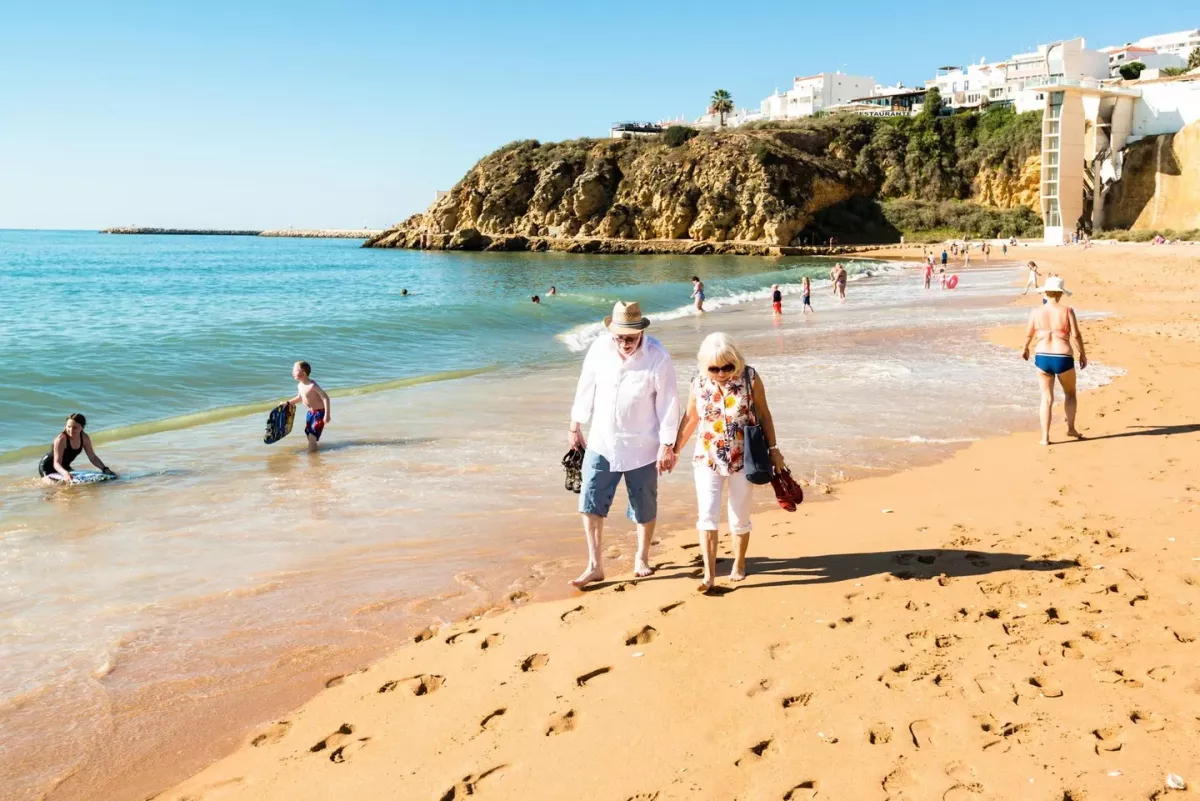
Think of Portugal as a series of micro‑climates and micro‑markets. The best place to retire to in Portugal depends on your budget, lifestyle and preferred day‑to‑day experience.
Very well‑established English‑speaking networks, especially around Albufeira, Lagos and Vilamoura. Among the higher‑cost regions, but with good access to both public hospitals and private clinics.
International, mixed‑age expat and local professional communities. Lisbon is one of the most expensive Portuguese markets, and Cascais can be even pricier.
Porto & the northern coast
Growing but less saturated than Lisbon or the Algarve, with a mix of digital nomads, families and retirees. Often slightly cheaper than Lisbon for comparable neighbourhoods, though central areas have also seen growth.
Silver Coast & Central Portugal
Smaller coastal towns, surf beaches, thermal spa heritage and university‑city energy in places like Coimbra. More low‑key expat presence than the Algarve, with pockets of British, German and Dutch retirees.
Madeira and the Azores
Subtropical island scenery in Madeira and lush, volcanic landscapes in the Azores. Smaller but tight‑knit expat communities are increasingly popular with remote workers and long‑stay retirees.
Common mistakes retirees make when moving to Portugal
- Underestimating bureaucracy: Assuming everything will be done within a few weeks, then panicking when appointments slip. Link back to your visa/timeline section to reinforce planning.
- Ignoring tax residency rules: Moving full‑time but not realising they’ve become Portuguese tax residents. Point them back to your tax and pensions section.
- Rushing into a property purchase: Buying after a single holiday without understanding winter climate, noise, damp or seasonal changes in the area. Link to your cost‑of‑living and property sections.
- Staying in an expat bubble: Not learning Portuguese or engaging locally, then feeling isolated and frustrated. Direct them back to the community and integration section.
- Under‑planning healthcare: Assuming travel insurance is enough, or not budgeting for private cover while waiting for SNS access.