A true postcard image, the traditional houses of Santana in Madeira are one of the island’s most recognisable symbols. These small, triangular, thatched‑roof cottages started out as simple rural homes in the north of Madeira, but over time they’ve become an icon for the whole island and a must‑see for visitors.
Typical houses of Santana: history, origins and construction
The typical houses of Santana in Madeira, often called thatched houses or “casas de colmo”, are traditional rural buildings whose origins go back to the early days of settlement on Madeira. They were modest family homes, designed to offer basic comfort and protection in a harsh, humid climate, especially for farming families in the north of the island.
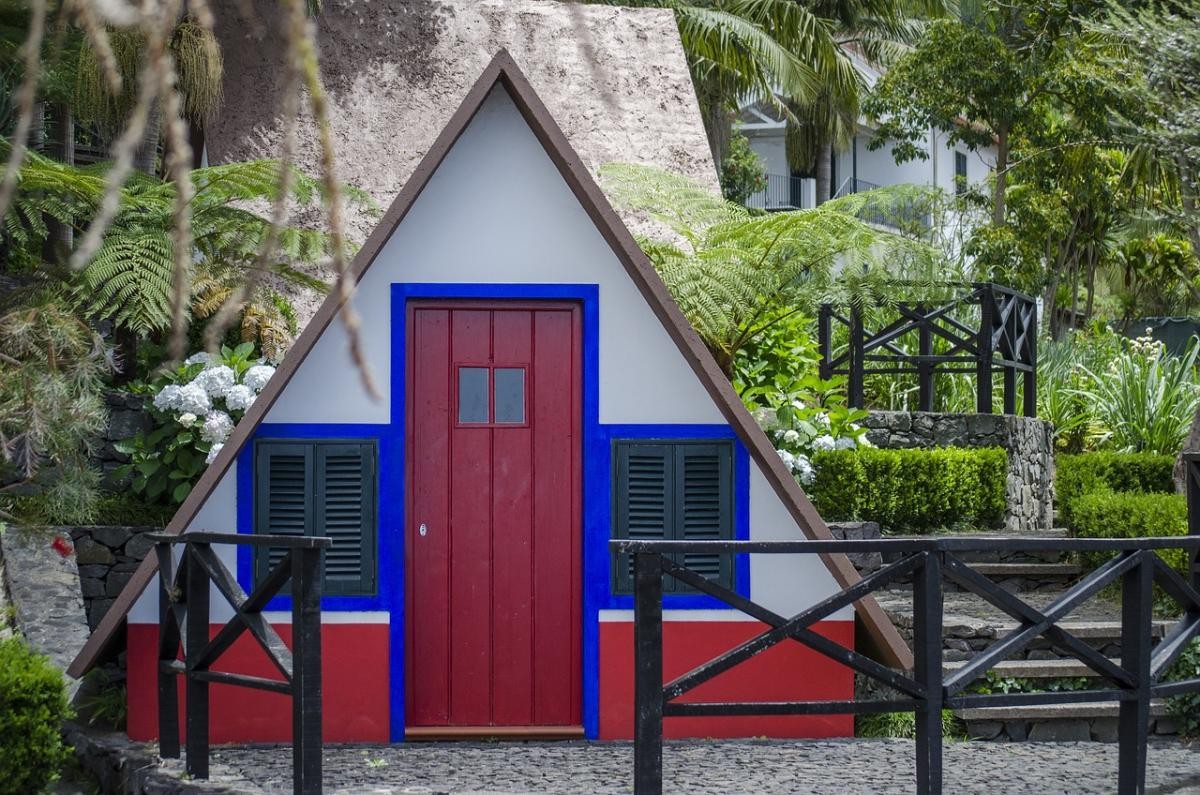
These houses were built above all with materials taken straight from the surrounding fields and forests. Timber from local woods formed the structure and façades, while the roof was made from heather, wicker and thatch. Everything was designed to be affordable, repairable and suited to the conditions on the north coast.
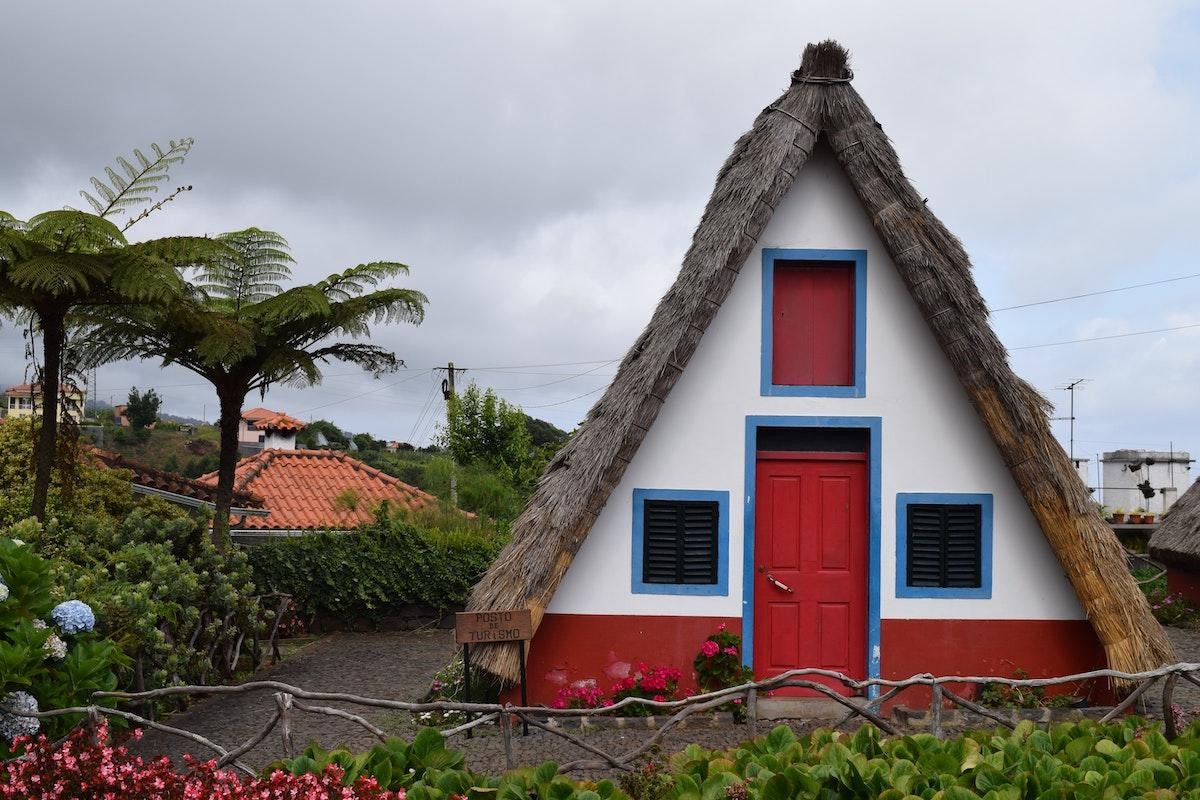
The thatched roof reflects the island’s agricultural life. Straw from cereal crops was not only used for bread but also carefully prepared to form the roof of these distinctive homes. After selecting firm wheat varieties, the straw was dried, bundled and then laid from the bottom upwards, in overlapping layers, before being trimmed to create the neat triangular silhouette that makes Santana’s houses so distinctive.
Main characteristics of the traditional houses in Santana
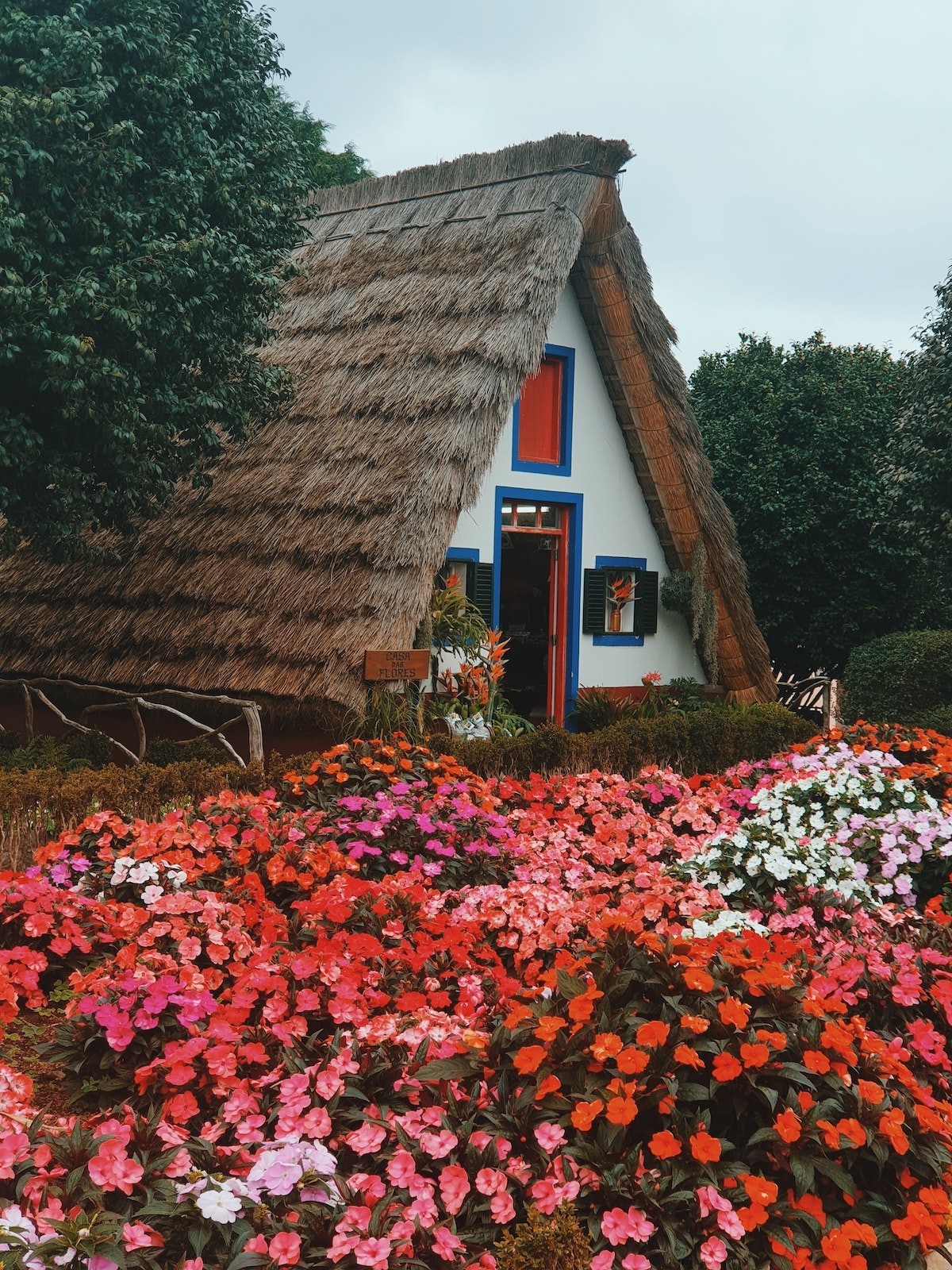
At first glance, what stands out about Santana’s houses is their triangular shape and bright colours. The wooden façades are often painted white, framed with strong blues and reds, while the steep thatched roof almost reaches the ground, creating the famous A‑frame profile.
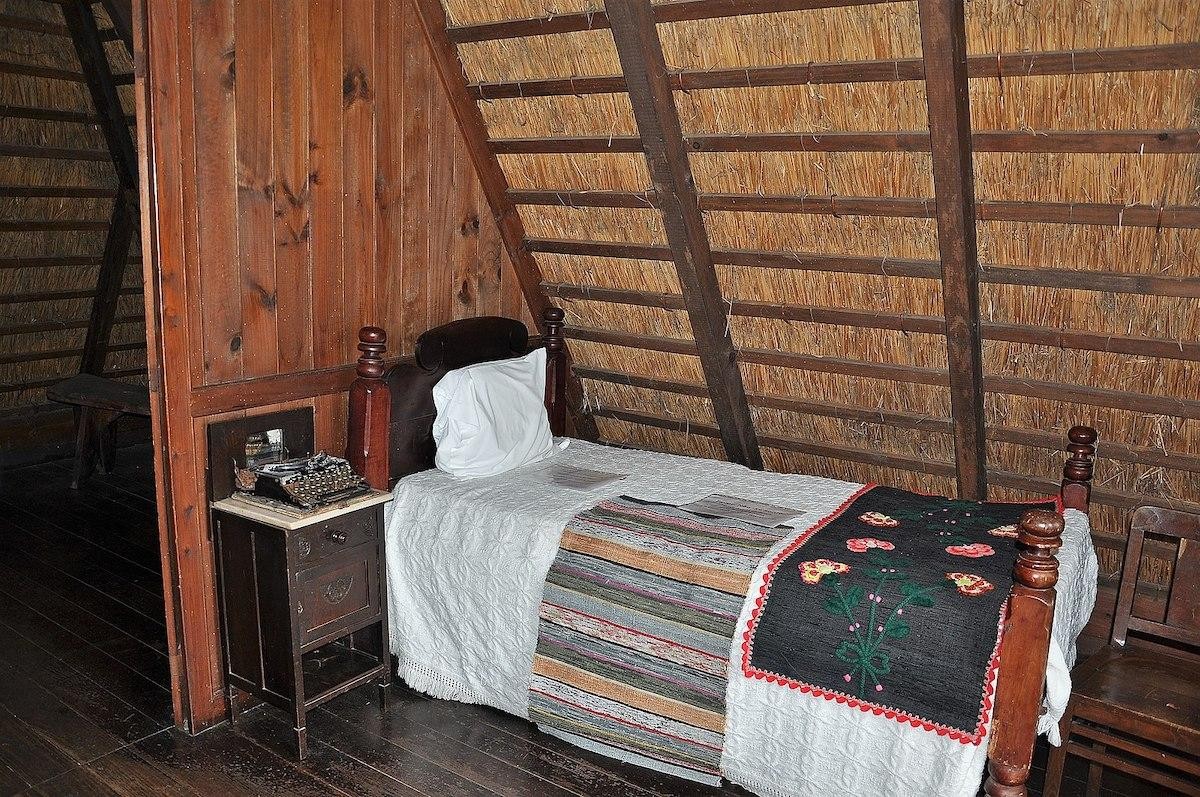
Inside, the traditional layout is quite simple but very functional:
- At the top, tucked close to the roof, is a loft‑style space. This acted as the family bedroom. Because warm air rises, this upper room stayed relatively warm in winter and pleasantly cool in summer.
- The ground floor, known locally as the “loja”, contained a small living area and, in many cases, a cellar or storage space for essentials like bread, flour and tools.
Fire was a constant risk, so the kitchen was often separated from the main structure. In some houses, it occupied a small outbuilding next door, which reduced the danger of sparks damaging the thatch and made everyday life a little safer.
The dimensions of a traditional Santana house
No two Santana houses were exactly the same. Families built them according to the land they had and what they could afford. Even so, traditional examples tend to fall within a similar size range.
- Length: 7 metres
- Width: 4.64 metres
- Height: 4.4 metres
- Roof angle: around 60º
The steep angle of the thatched roof is not just for looks. It helps rainwater run off quickly, limits moisture penetration and provides space for the loft room under the roof.
Maintenance of a traditional Santana house
Keeping a traditional Santana house in good condition takes work, especially when it comes to the roof. The thatch usually needs to be replaced every four to five years, depending on how exposed the house is to winter rain, wind and strong summer sun. Over time, water and UV light break down the straw, and new bundles have to be added to maintain protection.
Despite these weaknesses, thatch offered real advantages to the families who depended on it. It was:
- Lightweight and easy to source from local cereal crops.
- A natural insulator, helping to keep interiors more comfortable in Madeira’s humid climate.
- Relatively simple to repair, as long as people still knew the craft techniques.
Santana Madeira property for sale: buy traditional houses
Over recent decades, the classic thatched houses of Santana have almost disappeared from the northern Madeira landscape. Only a small number survive in something close to their original state, and even these have often been adapted to modern living standards.
If the idea of buying a typical Santana house appeals—whether for holidays or as a home—it’s important to know that:
- Many properties you see today in the municipality started life as thatched cottages, but have since been rebuilt or transformed.
- Fully traditional houses are extremely hard to find on the open market, and when they do come up, they may require significant specialist renovation.
That said, Santana and its parishes still offer a range of homes with character and strong ties to local rural life. If you like the area, it’s worth browsing property for sale in Santana and the wider north‑coast region, even if you ultimately choose a more conventional home inspired by the traditional look rather than a pure thatched original.
Where are the traditional houses in Santana?
The easiest place to see Santana’s most famous houses is in the centre of Santana town, near the City Hall, at the Núcleo de Casas Típicas de Santana. This is an open‑air cluster of reconstructed and preserved houses that shows how the traditional cottages looked and functioned.
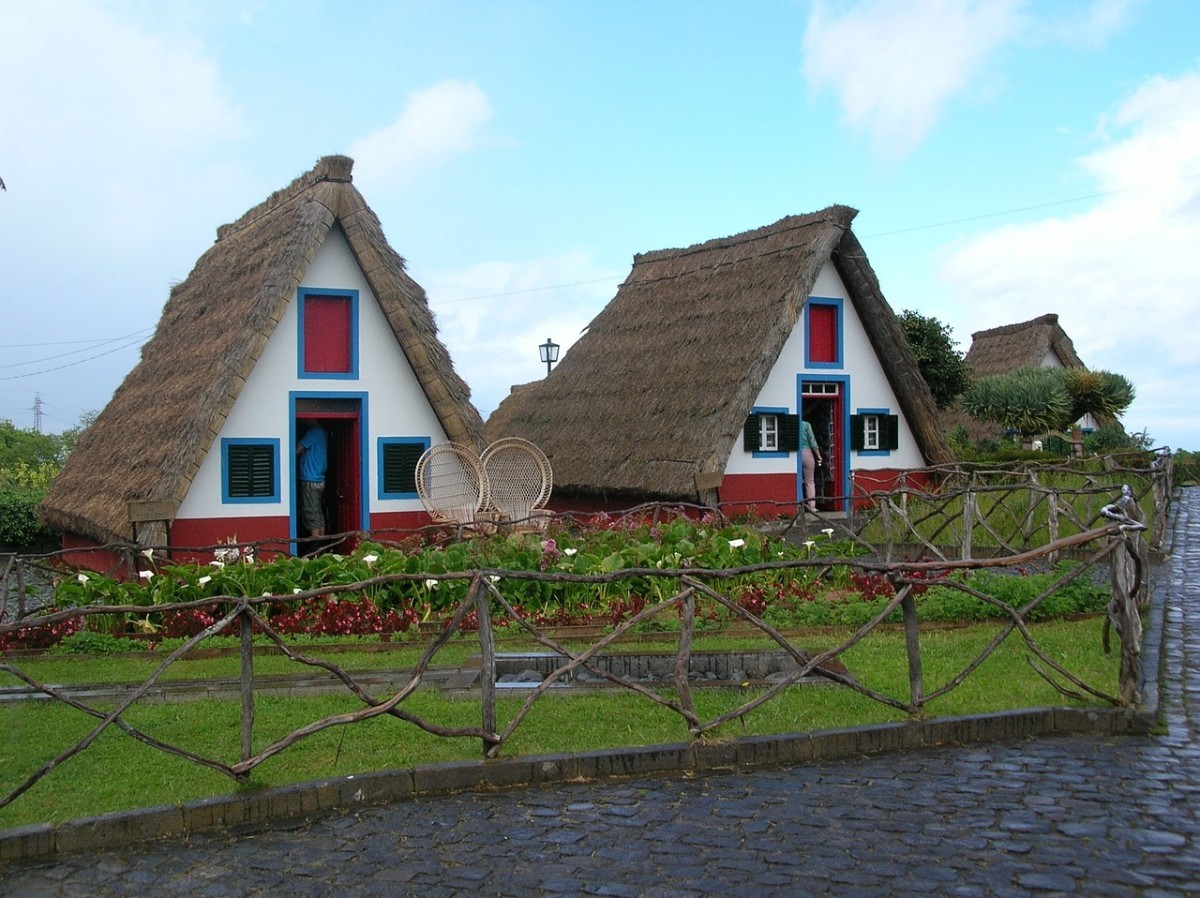
The Núcleo de Casas Típicas de Santana is usually open daily (typically 9:00–19:00). Entry is free, so you only need to budget for any souvenirs or local products you decide to take home.
While you’re there, it’s a good chance to try and buy typical Madeiran products such as honey cake, fennel sweets, poncha, beer bread and other local specialities.
How far is Santana from Funchal?
Santana is on Madeira’s north coast, while Funchal sits on the south, so any visit involves crossing the island.
- By car: the journey from Funchal to Santana is about 40 km and usually takes a little over 40 minutes, depending on traffic and the exact route you choose.
- By bus: several bus services run between Funchal and Santana. Journey times vary by route and stops, but can take up to around 90 minutes.
Stay in the know about living in Portugal as a foreigner—get our weekly newsletter for the latest travel, legal, and lifestyle news.
For a taste of the high life, sign up for the monthly luxury market round-up.